
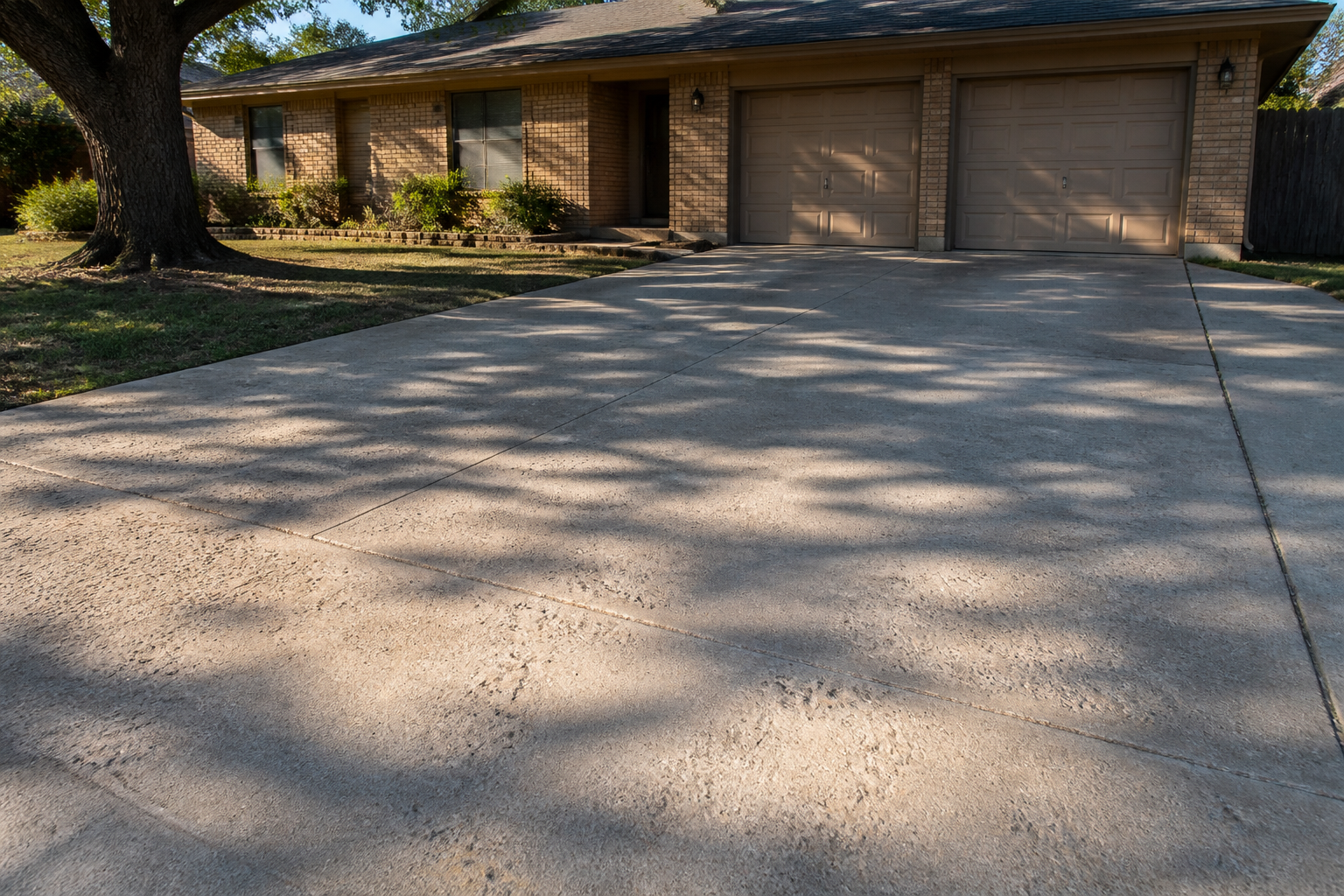
The Unwelcome Sight: A Cracked and Flaking Driveway
You see it every time you pull in or walk out to get the mail. First, it was a small pit. Then a few more appeared. Now, you’re noticing fine hairline cracks spreading like a spiderweb, and patches of the surface are flaking off, revealing the rough stones underneath.
A deteriorating driveway isn’t just an eyesore that hurts your home's curb appeal; it’s a sign that the structural integrity of the concrete is under attack. Here in San Antonio, our unique climate throws a lot at our homes, and your driveway bears the brunt of it. While you might be looking for a quick cracked driveway repair san antonio solution, understanding why it’s happening is the first step to a real, long-term fix.
The good news is that most of this damage is preventable. The problem isn't the concrete itself, but the fact that it's unprotected.
It All Starts With Water
Concrete looks and feels solid, but on a microscopic level, it’s more like a hard sponge. It’s full of tiny pores and capillaries. When it rains—and we all know how hard it can rain in South Texas—that water doesn't just run off. A significant amount soaks directly into the surface of your driveway.
This is the root cause of most concrete problems. Water penetration leads to a host of issues, from ugly stains to serious structural damage. It weakens the concrete from the inside out, making it soft and susceptible to whatever else the Texas weather has in store.
How San Antonio Weather Wreaks Havoc on Concrete
Your driveway is exposed 24/7 to the elements. The combination of intense sun, heavy rain, and occasional cold snaps creates a perfect storm for concrete degradation.
The Freeze-Thaw Cycle (Yes, Even in South Texas)
We may not get the harsh winters of northern states, but we get enough temperature swings around the 32-degree mark to cause real damage. Here’s how it works:
- Water Soaks In: After a rain, your porous concrete driveway is saturated with water.
- Temperature Drops: An overnight cold front pushes the temperature below freezing.
- Water Expands: The water trapped inside the concrete freezes and expands by about 9%. This expansion exerts immense internal pressure on the concrete.
- Temperature Rises: The next day, the ice thaws, and the pressure is released.
Repeating this cycle, even just a few times a year, acts like a tiny jackhammer inside your driveway, breaking it apart from within. This is the primary cause of surface pitting and flaking, a problem known as spalling.
The Brutal Texas Sun and Heat
The relentless San Antonio sun is another major enemy of your concrete. During a summer day, the surface of your driveway can get incredibly hot. This causes the concrete to expand, a process called thermal expansion. At night, it cools and contracts. This daily cycle of expansion and contraction creates stress on the slab, which can lead to cracking over time.
The sun’s UV rays also break down low-quality, store-bought topical sealers, causing them to yellow, peel, and fail, leaving your concrete exposed and vulnerable all over again.
Shifting Texas Soil
Many parts of the San Antonio area have clay-rich soil. This soil expands significantly when it's wet and shrinks dramatically when it's dry. This constant movement under your driveway slab creates uneven support. When one section of the slab is supported and another isn't, the unsupported section can easily crack under the weight of a vehicle.
Understanding Spalling: The 'Concrete Cancer'
That flaking, chipping, and pitting on your driveway has a name: spalling. It’s a sure sign that your concrete has suffered water damage. It starts when the internal pressure from the freeze-thaw cycle pops off the very top layer of cement paste, exposing the sand and aggregate (the small rocks) beneath.
At first, you might just see small pits. But as the damage continues, these pits connect, and larger chunks and flakes begin to break away. Not only is it ugly, but it also makes the surface rough and harder to keep clean. Dirt and grime get trapped in the pitted texture. If left unaddressed, spalling will continue to get worse, compromising more and more of your driveway's surface.
The Best Repair is Prevention: Sealing Your Concrete
Once a crack or spall has formed, a true repair is difficult and often just a temporary patch. The most effective strategy for dealing with a cracked driveway repair san antonio is to prevent the damage from happening in the first place. You do this by cutting off the problem at its source: water penetration.
This is where professional concrete sealing comes in. Unlike a paint or a coating that just sits on the surface, a high-quality penetrating sealer soaks deep into the pores of the concrete. It then triggers a chemical reaction inside the concrete, forming a permanent barrier that stops water from getting in.
By keeping water out, a penetrating sealer:
- Stops the freeze-thaw cycle before it can start.
- Reduces stains by preventing oil, dirt, and grime from soaking in.
- Makes cleaning easier, as debris stays on the surface where it can be easily washed away.
- Extends the life of your concrete for up to 8 years, protecting your investment.
A professionally cleaned and sealed driveway not only looks better but is also fully armed against the harsh Texas elements. You can see examples of the difference it makes in our project gallery.
Our Straightforward Approach to Protecting Your Driveway
Protecting your concrete surfaces is a simple, direct process that delivers lasting results. Whether it’s your driveway, patio, walkway, or pool deck, the method is the same.
First, we perform a thorough surface cleaning. Proper preparation is everything. We use professional-grade equipment to perform a deep pressure washing that removes all the ground-in dirt, grime, organic growth, and any old, failing sealers. The concrete must be perfectly clean for the sealer to penetrate and bond correctly.
After the surface is clean and has had time to dry completely, we apply the penetrating sealer. It’s a straightforward application that soaks into the concrete, working its magic from the inside out. There’s no shiny film or slick coating left behind—just your concrete, only now it’s protected. This process shields your driveway, walkway, or patio, helping it stand up to the San Antonio sun and storms for years to come.
Common Questions
- What is concrete spalling?
- Spalling is the flaking, chipping, or pitting of a concrete surface. It's caused by water penetrating the concrete and freezing, which creates internal pressure that 'pops' the top layer off. It's a clear sign of water damage.
- Will pressure washing my driveway fix the cracks and flaking?
- No. Pressure washing is a crucial first step that cleans the surface, but it is only a cleaning service. It does not repair existing damage or prevent future damage. Sealing the concrete after cleaning is what provides the protection.
- How does concrete sealing prevent cracks?
- A penetrating sealer soaks into the concrete's pores and creates an internal barrier that blocks water absorption. By keeping water out, it prevents the damaging freeze-thaw cycle and reduces stress from weathering, which are the main causes of spalling and many types of cracks.
- Is the concrete sealer you use like a paint or coating?
- No. We use a penetrating sealer that soaks into the concrete rather than forming a film on top. It protects from within, won't yellow or peel like a topical coating, and maintains the natural look and texture of your concrete.
- How long does concrete sealing protection last in Texas?
- Our professional concrete sealing treatment is designed to protect your surfaces for up to 8 years. It helps prevent the damage caused by the harsh San Antonio sun and rain.