
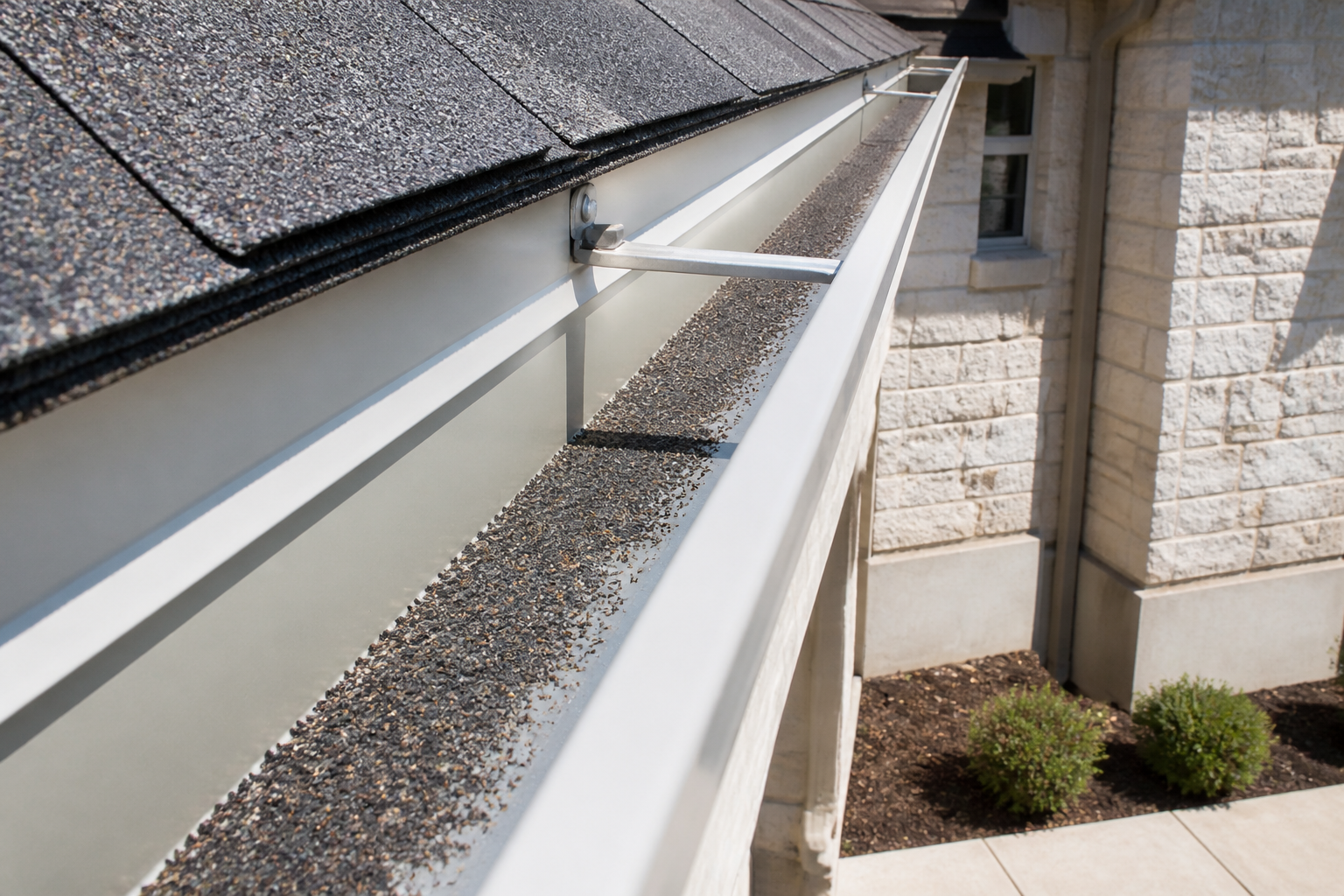
What Granule Loss Means for Your San Antonio Roof
Cleaning out your gutters is rarely an enjoyable chore, but it often reveals early warning signs about the condition of your home. If you notice piles of coarse, dark sand resting in your gutter troughs or washing out of your downspout splash blocks, you are looking at asphalt shingle granules.
Finding shingle granules in gutters San Antonio homeowners clear out each spring and autumn is a common occurrence. However, understanding why those granules are detaching and what their departure means for the long-term durability of your roof is critical. Those small mineral pieces are not merely decorative coloring; they serve as the primary defensive barrier between the harsh Texas elements and the underlying asphalt that waterproofs your home.
At Lone Star Roof Rejuvenation and Surface Protection, a Marine Corps veteran owned company based right here in San Antonio, we believe in practical education and honest assessments. Knowing the difference between routine shedding and serious degradation helps you address roofing issues before water intrusion causes interior damage.
The Anatomy of an Asphalt Shingle
To understand why granules shed, it helps to understand how modern asphalt shingles are manufactured. A standard fiberglass shingle consists of three core components:
- Fiberglass Mat: A woven base layer that provides structural backing, dimensional stability, and tear resistance.
- Asphalt Coating: A thick layer of petroleum-based asphalt applied to both sides of the fiberglass mat. This asphalt contains natural binding oils that keep the shingle waterproof and pliable.
- Mineral Granules: Crushed stone and ceramic-coated minerals embedded directly into the top layer of hot asphalt during manufacturing.
These mineral granules carry out several vital tasks. First, they deflect ultraviolet (UV) radiation from the sun. Bare asphalt breaks down rapidly when directly exposed to intense sunlight. Second, granules provide impact resistance against flying debris and hail. Third, they contribute to the fire resistance of the roofing system.
When asphalt shingles lose these protective granules, the underlying asphalt is exposed to the elements, accelerating the aging process of the entire roof.
Why Asphalt Shingles Shed Granules Under the Texas Sun
San Antonio weather is notoriously brutal on exterior building materials. The combination of intense heat, prolonged direct sunlight, and sudden severe weather creates an unforgiving environment for asphalt shingles.
Thermal Shock and Natural Oil Depletion
During peak summer months, roof surface temperatures in Bexar County can reach well past ambient air temperatures. This extreme heat bakes the shingles day after day. As shingles heat up, they expand; as temperatures drop during cool nights or sudden rain showers, they contract. This constant cycle is known as thermal shock.
Over years of relentless heat, the natural binding oils present in the asphalt begin to dry out and evaporate. When the asphalt loses its natural moisture and flexibility, it hardens and shrinks. The firm grip that the asphalt once had on the mineral granules weakens. Granules loosen from their embedded positions, and the next rainfall easily dislodges them into your gutters.
Hail and Severe Storm Impacts
San Antonio sits directly in the path of volatile South Texas storm fronts. Spring and early summer frequently bring high winds and hail storms. When hail strikes a roof, it exerts sudden physical impact on the shingles. Even smaller hail that does not crack the fiberglass substrate can knock thousands of loosened granules free. Following a hail storm, it is very common to find an elevated amount of shingle granules in gutters San Antonio neighborhoods deal with after severe weather.
Normal Shedding vs. Accelerated Degradation
Not every handful of shingle granules in your gutters signifies an emergency. The key is understanding what stage of life your roof is in and how much material is actually detaching.
When Granule Shedding Is Expected
- Newly Installed Roofs: If your roof was installed recently, finding granules in the gutters is normal. Manufacturers apply an excess of granules during production to ensure full coverage. The loose granules that were not fully embedded during manufacturing will wash away during the first several rains. This shedding typically tapers off quickly.
- Minor Normal Wear: As a roof ages naturally, a small amount of grit will wash off over time. A thin, scattered layer of sand during an annual gutter cleaning is ordinary.
When Granule Shedding Signals a Serious Problem
- Thick Deposits: Scooping out inches of heavy, dense mineral grit along the gutters indicates significant degradation of the asphalt binder.
- Bald Patches: Looking up at your roof and spotting dark, glossy, or discolored areas where the colored granules have completely worn away.
- Visible Fiberglass: In severe cases, the asphalt and granules wear down so far that the light-colored, fibrous mesh of the fiberglass mat becomes visible to the naked eye.
- Cracking or Cupping Shingles: When shingles lose both their oils and granules, they dry out completely, causing the edges to curl upward or hairline cracks to form across the shingle face.
The Consequences of Unchecked Granule Loss
Allowing granule loss to progress unchecked leads to rapid roof deterioration. Once the protective ceramic grit washes down your downspouts, the unprotected asphalt takes the full force of Texas UV rays.
Direct sun exposure oxidizes the exposed asphalt rapidly. It turns brittle, begins to micro-crack, and loses its ability to shed water efficiently. During heavy rainstorms, water can seep into these micro-cracks. When winter cold snaps arrive, trapped moisture expands as it cools, widening the fissures. Left unattended, this degradation eventually leads to active roof leaks, damaged decking, ruined attic insulation, and expensive interior repairs.
How Roof Rejuvenation Protects Against Granule Shedding
Replacing an entire asphalt shingle roof is one of the most expensive investments a homeowner can make. Fortunately, premature granule loss does not always mean your roof requires total replacement.
Proactive homeowners can restore the underlying chemistry of their shingles through advanced roof rejuvenation. This treatment utilizes a specialized nano-silica formula designed to penetrate deep into dried, aging shingles. The application targets the root cause of granule shedding by replenishing the lost oils and binding properties within the dried asphalt core.
By restoring pliability and moisture to the shingle, the asphalt regains its flexibility and helps lock the remaining granules in place. This treatment can extend the functional service life of asphalt shingles by up to 15 years through repeated applications. Homeowners can browse completed projects in our gallery to see the visible improvement in shingle conditioning and appearance.
Specific questions regarding application methods, structural details, and treatment suitability are thoroughly reviewed during an on-site consultation.
Practical Steps for San Antonio Homeowners
If you have noticed shingle granules around your downspouts or inside your gutter troughs, take the following practical steps to protect your property:
- Check the Ground First: Walk the perimeter of your home and inspect the concrete or soil directly beneath your downspout outlets. Heavy accumulations of grit on the ground indicate substantial runoff from above.
- Avoid Walking on Fragile Shingles: If your shingles are drying out and losing granules, foot traffic can dislodge even more grit and potentially crack brittle tabs. Inspect the roof from the safety of a ladder or from the ground with binoculars.
- Keep Gutters Clean: When granules mix with fallen leaves, oak tassels, and twigs, they create heavy, mud-like blockages that place unnecessary strain on gutter hangers and fascia boards.
- Seek a Professional Assessment: Rather than guessing whether your roof has reached the end of its useful life or simply needs maintenance, arrange an honest inspection.
You can easily schedule a free inspection with our Marine Corps veteran owned team to determine the current health of your shingles and explore effective preservation options.
Common Questions
- Is it normal to find some shingle granules in my gutters?
- A modest amount of loose grit is normal, particularly during the first year after a new roof installation as excess manufacturing granules wash away. However, heavy layers of sediment in older roofs point to dried-out asphalt that is losing its grip on the mineral coating.
- How does San Antonio heat contribute to granule loss?
- Intense UV radiation and extreme attic heat dry out the natural oils in asphalt shingles. As the asphalt hardens and loses flexibility, it shrinks and can no longer firmly hold the mineral granules, causing them to detach during rainstorms.
- Can lost roof granules be replaced?
- Granules cannot be glued back on individually once they detach. However, roof rejuvenation penetrates the asphalt layer to restore flexibility and halt further premature shedding, helping keep the remaining protective granules firmly embedded.
- How do I know if granule loss means I need a new roof?
- If your shingles still have their structural integrity and are not cupping, rotting, or severely broken, they may be an ideal candidate for rejuvenation rather than expensive replacement. A professional roof assessment will identify whether the shingle mat is intact.