What You Can (Usually) Pressure Wash
A pressure washer is a powerful tool for blasting away the grime, mold, and algae that our Texas weather encourages. But power needs control. Just because you can point a high-pressure stream of water at something doesn't mean you should. Here are the common surfaces around your home that can typically handle a good cleaning, as long as it's done right.
Concrete: Driveways, Patios, & Walkways
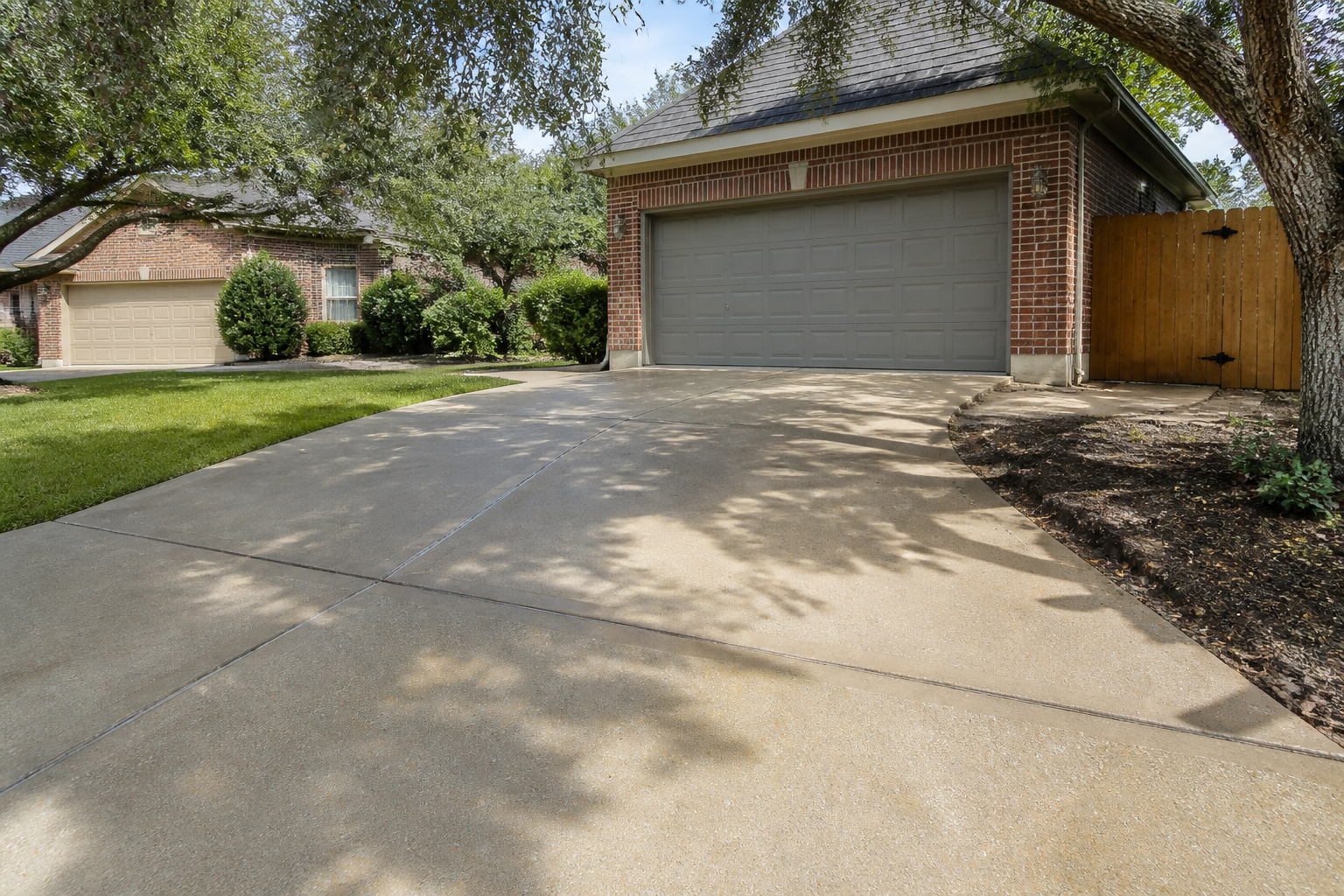
Your concrete driveway takes a beating from the San Antonio sun, sudden downpours, and daily traffic. It’s no surprise that it gets covered in dirt, oil stains, and black or green streaks of mold and algae.
Concrete is tough, making it the number one candidate for pressure washing. A thorough cleaning can make a startling difference, taking your driveway from dingy to bright. However, it's not invincible. Using a nozzle that's too narrow (like a zero-degree tip) or holding it too close can etch the surface, leaving permanent marks and making it more susceptible to future dirt.
After a deep clean, it's smart to protect that investment. Applying a quality sealant can help the surface resist stains and slow the return of mold and mildew. To learn more about protecting your hardscapes, see our page on concrete sealing.
Brick and Pavers
Like concrete, brick and pavers can stand up to pressure washing. It’s an effective way to remove moss and algae that grow in the damp, shaded areas. The main risk here isn't damaging the bricks themselves, but what's between them.
High pressure can easily blast away the joint sand that keeps pavers locked in place. A professional knows to use a wider spray pattern and a lower pressure to clean the surface without excavating the joints. If you’re doing it yourself, be prepared to re-sand the joints afterward.
Wood Decks and Fences
This is where things get tricky. Yes, you can pressure wash wood, but it's one of the easiest surfaces to ruin permanently. Wood is soft. Too much pressure, even for a split second, will gouge the surface, cause splintering, and leave fuzzy-looking patches called “felting.”
For wood, the key is to use the lowest possible pressure setting and a wide-angle nozzle (40-degree is a good start). The goal is to gently remove the layer of gray, dead wood fibers and surface-level mold, not to blast it with force. Think of it as using a sharp knife versus a sledgehammer. You're cleaning the wood to prepare it for a protective stain or sealant.
Because the risk of damage is so high, many homeowners choose to leave wood cleaning to the pros. It's a cleaning step that, when done right, sets the stage for a proper wood treatment that will protect your deck or fence from the elements for years to come.
Danger Zone: Surfaces to Absolutely Avoid
Using a pressure washer on the wrong surface is like using a hammer to fix a computer. It will only make things worse. Here are the parts of your home where you should never use high-pressure water.
Asphalt Shingle Roofs
This is the most important rule of all. Never, ever let anyone with a pressure washer get on your roof. Your asphalt shingles are covered with a layer of sand-like granules. These granules are essential; they protect the asphalt underneath from the brutal Texas sun, reflect UV rays, and are the roof's first line of defense against hail and rain.
High-pressure water acts like a sandblaster, stripping these vital granules away and leaving the asphalt exposed. This drastically shortens your roof's lifespan and can lead to leaks and expensive, premature replacement. It's the fastest way to destroy a perfectly good roof.
If your roof is covered in ugly black streaks (which is a type of algae called Gloeocapsa magma), the solution is a gentle, low-pressure cleaning or, even better, a treatment designed to restore its function. Our roof rejuvenation service uses a nano-silica formula that restores flexibility and protection to aging shingles without causing damage.
Windows and Screens
A pressure washer can shatter window glass, break the seals on double-pane windows (leading to permanent fogging inside), and shred window screens in an instant. Use a garden hose, a soft brush, and some soap. That’s it.
Stucco
Stucco might look hard, but it's a relatively brittle and porous material. High pressure can easily blast chunks of it right off your house, creating a hole that requires a difficult and costly patch-up job. The repair will almost never match the original texture perfectly.
Soft Wood Siding and Features
While a deck can sometimes be carefully washed, you should be extremely cautious with soft woods like cedar siding. It’s very easy to leave permanent wand marks and damage the wood. A soft wash technique using specialized cleaners and low pressure (no more than a garden hose) is the only safe way to clean these surfaces.
Electrical Panels, Meters, and Outlets
This should be obvious, but it needs to be said. Forcing high-pressure water into electrical components is incredibly dangerous. It can cause short circuits, lead to corrosion, and create a serious risk of electrocution.
The Right Tool and The Right Technique
Pressure washing is more than just point-and-shoot. The difference between a clean surface and a damaged one often comes down to experience. It involves:
- Choosing the right nozzle: Different colors mean different spray angles and intensity.
- Maintaining the proper distance: Getting too close is a primary cause of damage.
- Using the correct angle: Spraying at an angle prevents water from being forced behind siding or under shingles.
For many homeowners, the power and risk associated with pressure washers make it a job best left to professionals. A good pressure washing service doesn't just clean; it protects your property by using the right methods for each specific material.
Common Questions
- Can I pressure wash my asphalt shingle roof?
- No, you should never pressure wash an asphalt shingle roof. It will strip away the protective granules, severely shortening the roof's life and leading to expensive damage. The correct method is a gentle, low-pressure soft wash or a rejuvenation treatment.
- Is it safe to pressure wash a wood deck?
- It can be, but it's very risky for a DIY project. You must use very low pressure, the correct wide-angle nozzle, and proper technique to avoid gouging and splintering the wood. For most homeowners, hiring a professional is the safer choice.
- What's the biggest mistake people make with pressure washers?
- The most common and costly mistake is using too much pressure on a surface that can't handle it. This includes using a zero-degree (red) nozzle on wood or concrete, getting too close to the surface, or washing delicate materials like a roof, windows, or stucco.
- Why does my concrete driveway get so dirty in San Antonio?
- The combination of Texas heat, humidity, and periodic rain creates a perfect breeding ground for mold, mildew, and algae. These organisms thrive on porous surfaces like concrete, causing those ugly black and green streaks.