What Causes Those Dark Stains on San Antonio Roofs?
If you take a drive through almost any neighborhood in San Antonio—whether out in Stone Oak, over in Alamo Ranch, or down near Helotes—you will see dark, vertical stains running down asphalt shingle roofs. Many homeowners assume the discoloration comes from chimney soot, tree sap, or standard dirt blown across Bexar County.
In reality, those dark marks are caused by an airborne cyanobacteria called Gloeocapsa magma, commonly referred to as blue-green algae. The organism travels on the wind from roof to roof. Once a spore lands on an asphalt shingle, it anchors itself and begins feeding on the limestone filler used in modern asphalt shingle manufacturing.
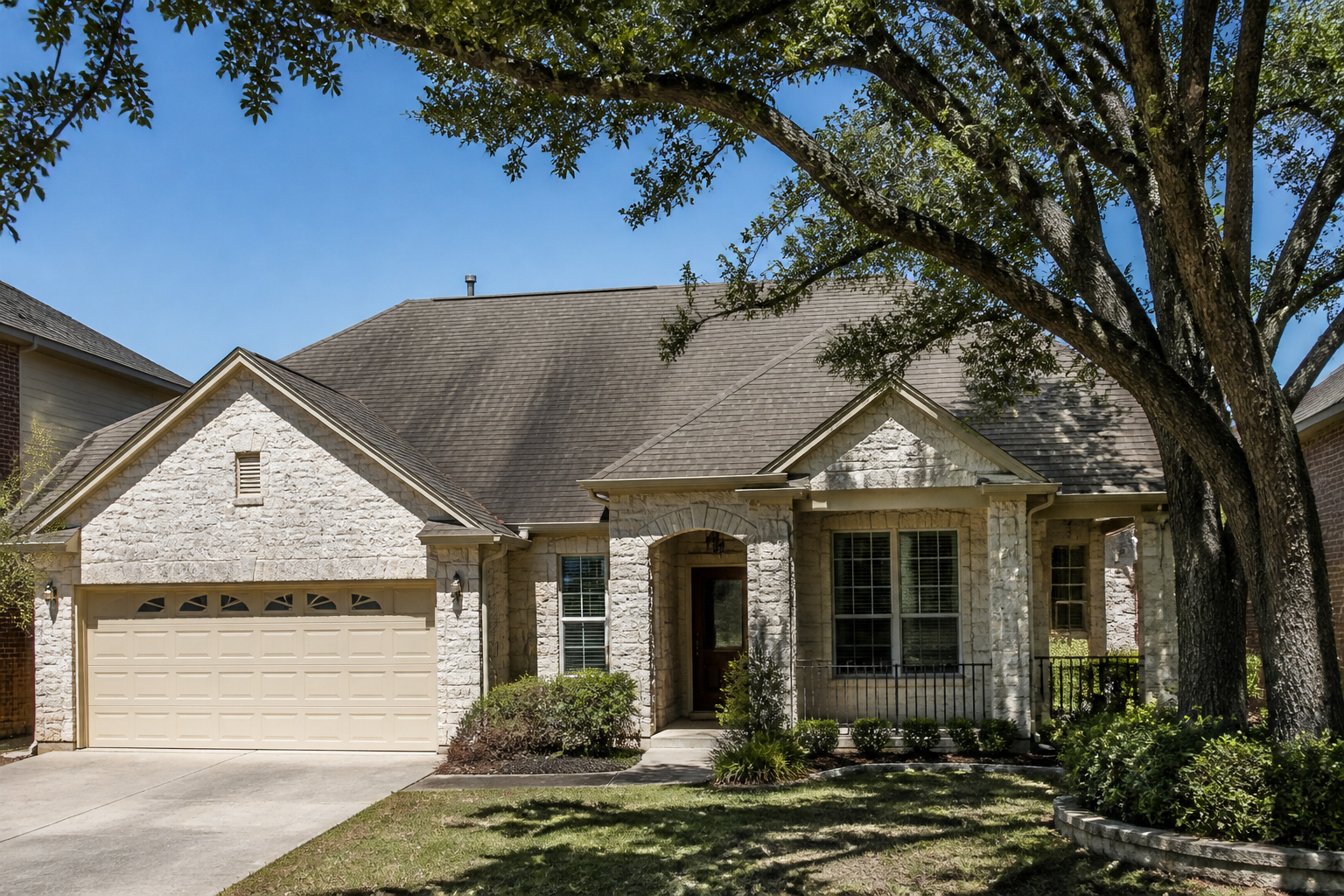
As the algae grows and protects itself from the harsh South Texas ultraviolet radiation, it develops a dark, pigmented outer sheath. That dark pigment is what creates the distinct black streaks on roof San Antonio homeowners see creeping across their homes. It usually shows up first on the north- or west-facing slopes where shade lingers longest after a morning rain.
Why South Texas Weather Makes the Problem Worse
San Antonio presents an ideal breeding ground for roof algae. Our climate brings specific conditions that encourage spores to spread and thrive:
- High Humidity and Warm Temperatures: Early morning dew combined with warm spring and summer temperatures creates a damp surface before the midday sun kicks in. Algae thrives in moisture and warmth.
- Limestone Shingle Composition: Shingle manufacturers add crushed limestone to fiberglass asphalt shingles to provide weight and bulk at a lower cost. For Gloeocapsa magma, limestone is not just a building material; it is an active food source.
- Shade and Tree Canopies: Mature live oaks, cedar elms, and pecans provide welcoming shade for our homes, but they also prevent sections of the roof from drying out quickly, giving algae the foothold it needs.
- Frequent Weather Shifts: Severe spring thunderstorms and wind push airborne spores across subdivisions, depositing them onto roofs that were previously clean.
Once established, the growth does not simply rinse off in the next rain shower. Rain helps distribute the colonies further down the slope, turning faint spots into broad, dark bands.
Are Black Streaks Something to Worry About?
Homeowners often ask whether these streaks are strictly a cosmetic issue or if they pose a genuine threat to the structure. The short answer is that while the stains look bad from the curb, their long-term effect on shingle performance is the real concern.
Excessive Heat Absorption
San Antonio summers already push roof surfaces past 150 degrees under direct sun. Asphalt shingles are designed with colored ceramic granules that reflect a portion of solar radiation. When algae blankets those reflective granules in a black layer, the roof absorbs significantly more radiant heat.
This extra thermal load transfers straight down into your attic decking and insulation, forcing your air conditioning system to work harder during July and August. More importantly, prolonged superheating accelerates the drying and evaporation of the essential petrochemical oils inside the asphalt mat.
Premature Granule Loss
As the algae consumes the limestone filler and expands within the surface layers, it loosens the bond holding the protective granules in place. Once granules detach, rain sweeps them down into the gutters. Without those granules, the underlying asphalt is exposed directly to UV rays, causing it to crack, curl, and become brittle long before its time.
Increased Vulnerability to Texas Storms
A dried-out, algae-weakened shingle lacks the flexibility needed to withstand South Texas weather extremes. Hail impacts cause deeper bruises on brittle shingles, and strong storm gusts can snap curled edges that would otherwise flex and stay sealed.
Why Traditional Pressure Washing Can Ruin Your Roof
When homeowners notice black streaks, their first impulse is often to climb up with a standard pressure washer or hire a general handyman to blast the stains away. Using high-pressure water on asphalt shingles is one of the fastest ways to destroy a roof.
High pressure strips away thousands of square feet of protective granules in minutes. Once those granules are blasted off, the shingle is ruined, and leaks soon follow.
While professional pressure washing is excellent for hard exterior surfaces like concrete driveways and stone patios, delicate roofing materials require a dedicated soft-wash approach. A proper low-pressure cleaning uses targeted, non-abrasive solutions to neutralize the algae down to the root without dislodging the granules or forcing water underneath the shingle overlaps.
Cleaning and Protecting Shingles with Roof Rejuvenation
Cleaning the surface algae removes the black stains, but it does not reverse the dryness caused by years of Texas heat. That is where roof rejuvenation steps in to protect the asphalt structure beneath.
Lone Star Roof Rejuvenation and Surface Protection is a Marine Corps veteran owned company based right here in San Antonio. Our approach targets both the visual contamination and the physical condition of the asphalt shingles:
- Surface Inspection: We examine the overall state of the shingles, checking for granule loss, hail impacts, sealant failure, and brittle spots.
- Gentle Cleaning: The algae colonies are treated and gently eliminated using low-pressure methods that preserve the integrity of the surface.
- Nano-Silica Deep Treatment: Once clean, the roof receives a specialized nano-silica rejuvenation treatment. The microscopic silica particles penetrate deep into the asphalt mat, replenishing lost binding agents and restoring the shingles' natural flexibility.
- Granule Lock: The treatment helps bind the remaining granules firmly to the asphalt base, preventing further erosion from wind, rain, and hail.
A single rejuvenation treatment can add up to 15 years of serviceable life to an asphalt shingle roof, keeping functional materials on your home and out of local landfills.
What to Expect During an Assessment
Every home faces unique environmental factors. A house sitting under heavy tree cover off Bandera Road has different moisture levels than a sun-baked roof out in New Braunfels.
When our Marine Corps veteran owned team evaluates your property, we look at the entire envelope. We inspect the pitch, ventilation, drainage pathways, and the extent of any microbial growth.
Questions regarding specific product formulations, application duration, dry times, and test evaluations are thoroughly discussed during the free estimate so you have complete clarity before any work begins on your home.
To see real examples of how local homes look before and after algae removal and shingle conditioning, browse our project gallery to examine actual results from neighborhoods across the greater San Antonio area.
Proactive Steps to Reduce Algae Regrowth
Beyond treating the shingles, there are several practical maintenance habits that can help keep black streaks from returning quickly:
- Trim Overhanging Branches: Cut back limbs that cast dense shade over the roofline. Allowing direct sunlight to reach the shingles dries out morning condensation faster, depriving algae of moisture.
- Keep Gutters Clear: Clogged gutters cause water to back up along the drip edge and fascia, raising local humidity levels around the eaves where algae frequently starts.
- Clear Roof Valleys: Leaves and pine needles that gather in valleys or behind chimneys hold water like a sponge. Sweep or gently blow these debris traps clean twice a year.
Common Questions
- What are the black streaks on my roof?
- The black streaks are caused by an airborne cyanobacteria called Gloeocapsa magma. It anchors to asphalt shingles and feeds on the limestone filler, developing a dark outer sheath to shield itself from UV rays.
- Can I use a pressure washer to clean black streaks off my shingles?
- No. High-pressure washing strips away the ceramic granules that shield the asphalt from the sun and weather. Safe cleaning requires a low-pressure soft wash method that neutralizes the algae without disturbing the granules.
- Do black streaks make my home hotter during the summer?
- Yes. Algae darkens the surface of the roof, causing it to absorb significantly more heat from the Texas sun. This elevates attic temperatures and places a heavier cooling burden on your air conditioning system.
- How long does roof rejuvenation extend the life of asphalt shingles?
- A professional nano-silica rejuvenation treatment can add up to 15 years of functional life to an asphalt shingle roof by restoring flexibility and locking granules in place.