Why Outdoor Living Concrete Takes a Different Kind of Beating
Most homeowners think about concrete protection only when they look at their driveways. Oil drips, tire marks, and heavy vehicle traffic make driveway wear obvious. Yet the concrete slabs that form your back patio, pool deck, and outdoor walkways endure an entirely different kind of punishment every single day.
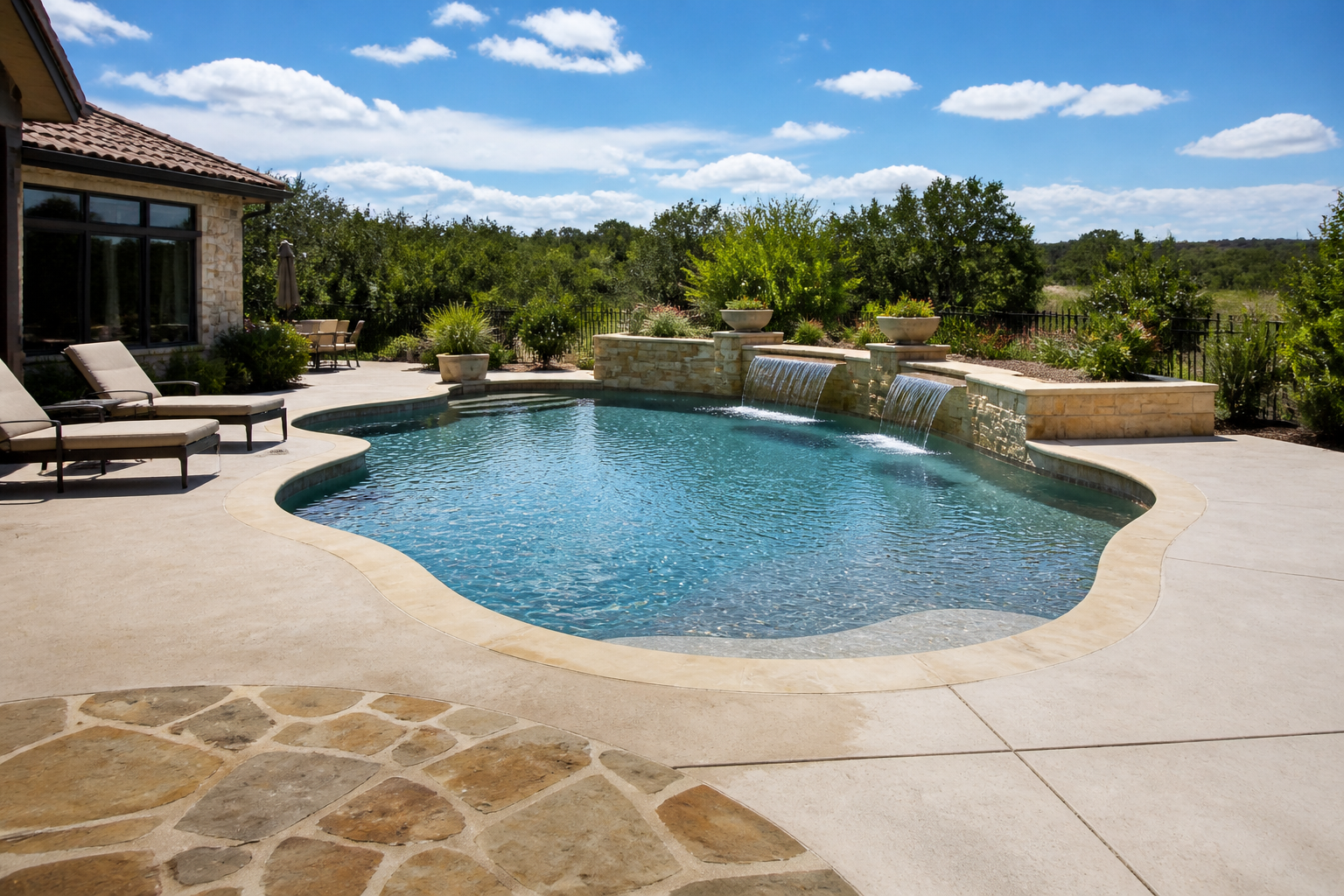
In San Antonio, outdoor living spaces are central to home life. From backyard barbecues to relaxing around the pool, these slabs see constant foot traffic. More importantly, they sit under the unforgiving South Texas sun without the break that a shaded garage or parked vehicle might provide. Without proper care, sun, standing water, and pool chemicals slowly break down the concrete matrix from the inside out.
Investing in professional concrete patio sealing San Antonio homeowners rely on prevents premature surface failure and keeps backyards functional and clean.
The Unique Threats to Patios and Pool Decks
Concrete looks rock-solid, but it is actually a porous, sponge-like material. When exposed to the elements, it absorbs whatever liquids rest on its surface. In our local climate, several specific factors accelerate concrete degradation.
Relentless UV Ray Exposure and Thermal Stress
San Antonio summers bring weeks of triple-digit temperatures. Bare concrete absorbs solar radiation all day, reaching temperatures well above the ambient air. As the slab heats up, it expands. When the sun goes down or a sudden thunderstorm rolls through, the surface cools rapidly and contracts.
This continuous expansion and contraction creates internal stress. Over time, micro-fissures develop on the surface. These microscopic cracks allow moisture and dirt to settle deeper into the slab, accelerating surface flaking, dusting, and spalling.
Pool Water, Splashout, and Water Chemistry
Pool decks face an added layer of chemical exposure that driveways never experience. Whether your pool uses traditional chlorine or a saltwater chlorination system, pool water is treated with sanitizers, algaecides, and balancing acids.
Every time kids splash or swimmers exit the pool, that chemically treated water soaks into the surrounding concrete deck. As the water evaporates under the Texas heat, chemical residues, salts, and dissolved minerals remain trapped inside the concrete pores. Salt crystals expand as they dry, exerting hydraulic pressure inside the pore walls. Over several seasons, this process causes the top layer of concrete around pool edges to pit, crumble, and erode.
Moisture Intrusion and Organic Growth
While South Texas is known for heat, our spring and autumn storms bring heavy downpours. Patios, particularly covered patios or slabs set adjacent to lawn irrigation heads, often retain moisture in shaded corners.
When water sits in untreated concrete pores, it creates the ideal breeding ground for algae, moss, and mildew. Dark, slick patches not only ruin the appearance of your outdoor living space, but they also turn pool decks and walkways into serious slipping hazards. Regular foot traffic then grinds that organic matter deeper into the unsealed concrete grain.
Surface Coatings vs. Penetrating Sealers
When looking into concrete protection, homeowners often encounter two primary categories: topical surface coatings and deep-penetrating sealers. Understanding the difference is critical, especially for pool decks and patios.
The Problem with Topical Coatings Around Pools
Topical coatings, such as acrylic clear coats or heavy concrete paints, form a plastic film on top of the slab. While they can look glossy initially, they present two major drawbacks in South Texas:
- Trapped Moisture and Peeling: Ground moisture naturally migrates upward through the soil and into the slab. A topical coating traps that moisture underneath. Under intense sun, that trapped water turns to vapor, creating hydrostatic pressure that bubbles, blisters, and peels the surface coating.
- Slick Surfaces: Film-forming sealers make smooth or broom-finished concrete slick when wet. Around a swimming pool or outdoor dining area, slick concrete creates unnecessary danger.
How Deep-Penetrating Sealers Work
For outdoor living spaces, penetrating sealers offer far superior performance. Instead of resting on top of the concrete, a penetrating sealer sinks into the open pores and micro-capillaries of the slab. It chemically reacts below the surface to form an internal hydrophobic barrier.
Because the protection sits inside the concrete rather than on top of it, a penetrating sealer:
- Does not alter the natural slip-resistant texture of your concrete deck.
- Will not peel, flake, or blister under high heat.
- Allows moisture vapor from the ground to escape while blocking liquid water, pool chemicals, and oils from soaking in.
- Keeps concrete looking clean and natural rather than plastic-coated.
Quality concrete sealing can protect flatwork for up to 8 years, defending the structural integrity of your slab against weather and chemical wear.
Preparing the Surface: Why Deep Cleaning Comes First
Applying a penetrating sealer requires a clean, open pore structure. If a sealer is sprayed onto a dirty, stained, or mildew-covered patio, it cannot absorb properly. The barrier will be uneven and ineffective.
Before sealing, the slab must undergo thorough surface preparation. Professional pressure washing removes embedded limestone dust, tree sap, algae colonies, barbecue grease, and chemical residues from the concrete pores. Unlike high-pressure washing done by an untrained operator, professional exterior cleaning uses the correct balance of pressure and surface cleaners to clean thoroughly without gouging the concrete cream layer.
Once the slab is deep-cleaned and thoroughly dried, the sealer can penetrate deeply and uniformly throughout the patio or pool deck.
Protecting Your Entire Outdoor Living Space
Concrete patios rarely exist in isolation. Many San Antonio backyards feature integrated living spaces that combine concrete slabs, pool coping, stone features, and wooden structures like pergolas, fences, or covered patio posts.
Protecting the concrete slab is one essential piece of exterior maintenance. If your outdoor space includes wooden shade structures or privacy fencing exposed to the same sun and moisture, pairing slab protection with professional wood treatment helps ensure your entire outdoor retreat stays solid and well-maintained. Applying targeted treatments to each specific material prevents premature weathering across your whole backyard.
Plainspoken Service from Lone Star
At Lone Star Roof Rejuvenation and Surface Protection, we take an honest, practical approach to property care. As a Marine Corps veteran owned company based right here in San Antonio, we do not believe in high-pressure sales pitches or complicated jargon.
We assess your outdoor concrete, explain precisely what the slab needs to handle Texas weather, and get the work done right. Questions regarding safety, cure times, and job duration are explained completely during our free on-site estimate so you know exactly what to expect before work begins.
Common Questions
- How long does concrete patio sealing last in San Antonio?
- A professional penetrating concrete sealing application can protect your patio or pool deck flatwork for up to 8 years, defending against sun, moisture, and pool chemicals.
- Will sealing my pool deck make it slippery when wet?
- No, penetrating sealers do not form a plastic film on top of the concrete. They sink directly into the pores, leaving the original surface texture and slip resistance intact.
- Can sealing stop pool chemicals and salt from pitting my concrete deck?
- Yes. Penetrating sealers create an internal barrier within the concrete pores that repels water, salt, and pool chemicals, preventing them from soaking into the slab and causing surface spalling.
- How long does the sealing process take to dry and cure?
- Specific drying times, cure windows, and safety procedures vary depending on environmental conditions and the exact formulation used, all of which are reviewed in detail during the free estimate.