
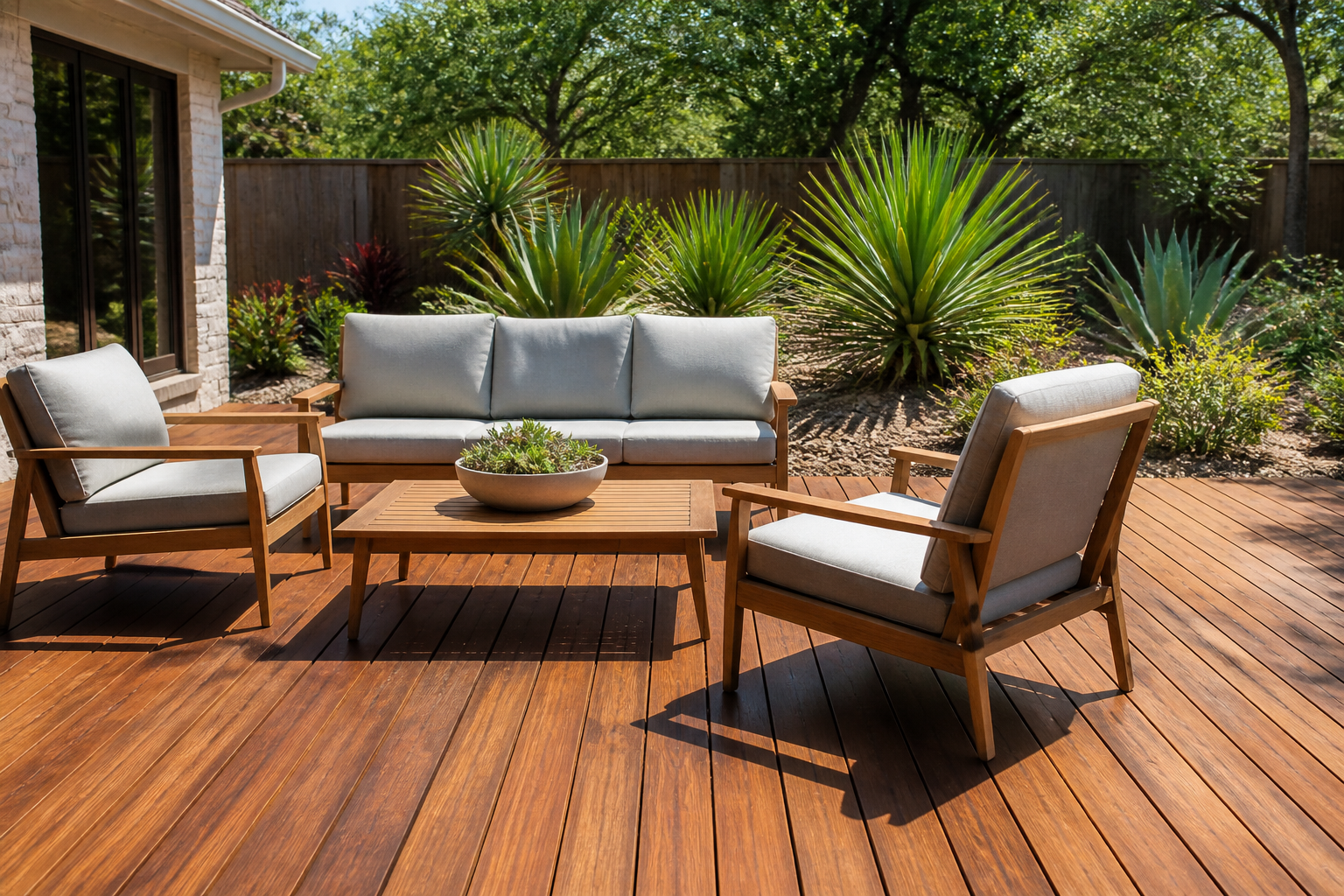
Your Deck's Biggest Enemy: The Texas Weather Cycle
A wood deck is more than just an addition to your house; it's a part of your San Antonio lifestyle. It's where you host barbecues, watch the kids play, and unwind after a long day. But that valuable outdoor space is under constant attack from the one thing we can't change: the Texas climate. The relentless sun, sudden downpours, and high humidity create a destructive cycle that can ruin a deck in just a few short years if it's not properly protected.
Understanding how this damage happens is the first step to preventing it. It's a one-two punch of intense UV radiation and invasive moisture that works to break down your deck board by board.
The Scorch: Sun and UV Damage
Think of the San Antonio summer sun as a slow-motion sandblaster for your deck. Wood contains a natural polymer called lignin, which acts like a glue holding the wood fibers together. The sun's ultraviolet (UV) rays relentlessly break down this lignin.
At first, you'll notice the color fading. That rich, warm tone of new wood starts to turn a dull, washed-out gray. This isn't just a cosmetic issue; it's a sign that the wood's surface integrity is compromised. As the lignin continues to degrade, the wood fibers lose their bond, leading to:
- Splintering: The surface becomes rough and full of splinters, making it unsafe for bare feet.
- Cracking: Small surface cracks, known as checking, begin to appear as the wood dries out and becomes brittle.
- Weakness: The wood becomes softer and more susceptible to physical damage and moisture intrusion.
The Soak: Rain and Moisture Damage
After the sun has weakened the wood, the moisture moves in. In our part of Texas, we can go from a scorching drought to a week of heavy rain in the blink of an eye. Wood is a porous material, and when it's unprotected, it acts like a sponge.
Here’s the destructive cycle:
- Absorption & Swelling: During a rainstorm, the dry, cracked wood soaks up water, causing it to swell.
- Evaporation & Shrinking: The intense sun and heat return, baking the moisture out of the wood. This causes the wood to shrink rapidly.
This constant cycle of swelling and shrinking puts immense stress on the boards. The fasteners holding your deck together can loosen. The wood itself begins to warp, cup (where the edges curl up), and crack wide open. These new, larger cracks then allow even more water to penetrate deeper into the wood during the next storm, accelerating the process.
Even worse, trapped moisture creates the perfect breeding ground for mold, mildew, and algae. These growths are not only ugly and slippery, but they also contribute to wood rot, which can compromise the structural safety of your deck.
The Two-Step Defense: Cleaning and Treatment
An unprotected deck is a deck that's on a fast track to being replaced—a costly and disruptive project. The good news is that you can stop this cycle of decay with a professional maintenance plan. A proper wood deck treatment in San Antonio isn't just about slapping on a coat of stain; it's a two-part process designed to clean and protect.
Step 1: A Clean Foundation is Crucial
Applying a new treatment over a dirty, gray, or mildew-covered deck is like painting over rust. It might look okay for a short time, but the underlying problems are still there, and the new coating will fail quickly.
Before any protection can be applied, the deck must be thoroughly and safely cleaned. This involves removing all the dead gray wood fibers, dirt, grime, and organic growth. While many people think of this as a simple DIY job, it's a delicate process. Using the wrong cleaners or too much pressure can gouge the soft wood, causing permanent damage. A professional pressure washing service uses the correct, low-pressure techniques and wood-safe cleaning agents to restore the wood's natural color without causing harm.
Step 2: Professional-Grade Wood Treatment
The second, and most important, step is applying a high-quality, penetrating wood treatment. This is what truly defends your deck against the sun and rain. The products you find at a big-box store often create a film on the surface that can peel and flake, trapping moisture underneath.
A professional-grade treatment works differently. It is designed to:
- Penetrate Deeply: The formula soaks into the wood fibers, rather than just sitting on top. This replenishes the wood's natural oils that were baked out by the sun.
- Block UV Rays: Our treatments contain high-quality trans-oxide pigments. These pigments are like a powerful, long-lasting sunscreen for your deck, absorbing harmful UV radiation and preventing the wood from graying and breaking down.
- Seal Out Water: The treatment creates a hydrophobic barrier that repels water, preventing it from soaking in and starting the swell/shrink cycle. Water will bead up and roll off, just like it does on a freshly waxed car.
This combination of deep penetration, UV blocking, and water sealing is the key to preserving the structural integrity and beauty of your deck for years to come. It stops the cycle of damage before it can lead to expensive repairs or a full replacement.
The Practical Benefits of Protecting Your Deck
Investing in a regular maintenance schedule for your wood deck isn't an expense; it's a way to protect a valuable asset. The benefits are clear and practical for any San Antonio homeowner.
- Save a Fortune on Replacement: The cost of lumber and labor to build a new deck is significant. A consistent treatment plan costs a small fraction of a full rebuild.
- Improve Safety: A well-maintained deck is free of dangerous splinters, slippery mildew, and the risk of structural failure due to rot.
- Enhance Home Value: A beautiful, functional deck is a major selling point and adds to your home's overall curb appeal. You can see examples of restored surfaces in our gallery.
- Maximize Your Enjoyment: You and your family will get far more use out of a deck that is clean, safe, and attractive.
Your wood deck is built for enjoying the Texas outdoors. By understanding the threats it faces and taking the right steps to protect it, you ensure it will be a source of pride and enjoyment for many seasons.
Common Questions
- How often should I have my deck treated in San Antonio?
- The frequency depends heavily on how much direct sun exposure your deck gets. For decks with intense, all-day sun, you might need treatment every 2-3 years. For more shaded decks, it could be every 3-5 years. The key is to treat it before it starts to look gray and faded.
- Is pressure washing enough to protect my wood deck?
- No. Pressure washing is a crucial first step for cleaning, but it provides zero protection. Cleaning removes dirt, mildew, and dead wood fibers, but it doesn't do anything to block UV rays or repel water. Sealing is the step that provides protection.
- My deck is already old and gray. Is it too late to treat it?
- In most cases, it's not too late. That gray layer is just dead wood fiber on the surface. A professional cleaning process can remove that layer to reveal the healthier wood underneath, which can then be treated to bring back its color and protect it from further damage.
- What's the difference between staining and sealing a deck?
- While often used interchangeably, they have different primary jobs. A simple stain is mainly for color. A sealer is mainly for protection from moisture. A high-quality professional wood treatment does both: it uses pigments (color) for UV protection and penetrating oils and resins to seal out water.