
The Silence After the Storm
That familiar sound of hail pounding on the roof is a noise every San Antonio homeowner dreads. When the storm passes and you look outside, you breathe a sigh of relief. No broken windows. No obvious, gaping holes in the roof. From the street, everything looks like it held up just fine.
But here's the honest truth: the most common type of hail damage isn't the dramatic, insurance-claim-worthy destruction you see on the news. It's the quiet, cumulative damage that you can't see from your lawn. This hidden damage accelerates the aging process of your asphalt shingles, leaving them vulnerable to the next storm and the relentless Texas sun.
Completing a proper hail damage roof assessment is about looking for more than just obvious holes. It’s about understanding the subtle ways a storm weakens your home's first line of defense.
The Real Enemy: Granule Loss
Your asphalt shingles aren't just flat pieces of asphalt. They are covered in a layer of tiny, ceramic-coated mineral granules. These granules are not just for color; they serve a critical purpose.
What Do Shingle Granules Do?
- UV Protection: They are like sunscreen for your roof, blocking the harsh UV rays that dry out the asphalt, making it brittle and prone to cracking.
- Impact Resistance: They provide a hard, protective layer that helps deflect the force of rain, debris, and, yes, hail.
- Fire Resistance: They contribute to the roof's overall fire-resistance rating.
Hail acts like sandpaper, or a thousand tiny hammers, knocking these essential granules loose. Even small, pea-sized hail can strip away a significant amount of your roof's protective layer. This is the damage that doesn't cause an immediate leak but sets your roof up for failure down the road.
How to Spot Granule Loss
You don't need to climb a ladder to get the first clue. The evidence is usually right under your feet.
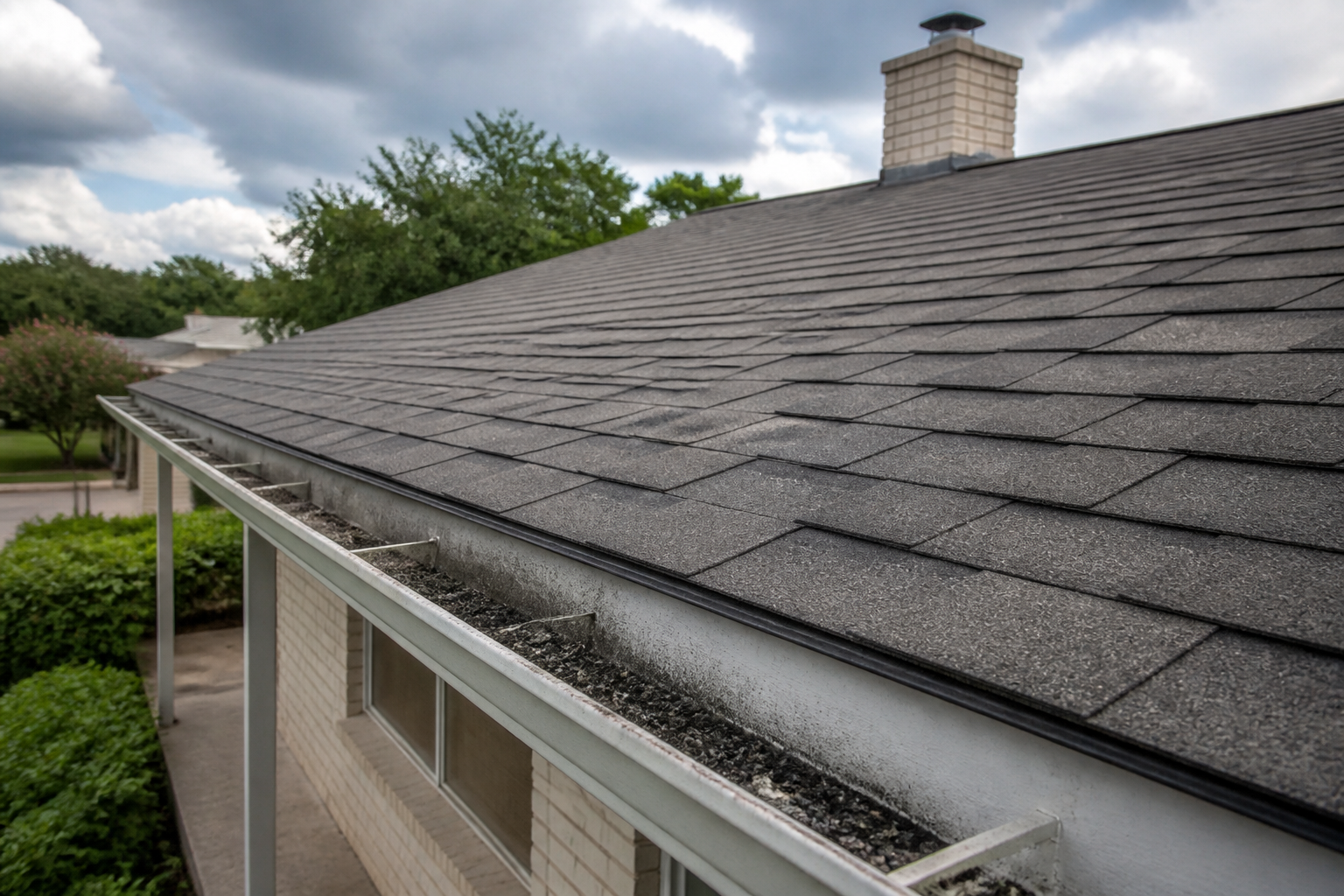
- Check Your Gutters and Downspouts: After a hail storm, look at the areas where your downspouts drain onto your driveway or lawn. Do you see a pile of what looks like coarse black sand or tiny, colorful pebbles? Those are your shingle granules. A small amount is normal over a roof's life, but a large, sudden accumulation after a storm is a major red flag.
- Look for 'Bald' Spots: If you can safely see a section of your roof from a second-story window, look for spots on the shingles that appear darker, shiny, or “bald.” This is where the underlying black asphalt is now exposed to the elements because the granules have been knocked away.
- Inspect for Bruising: On the shingles themselves, hail can leave behind “bruises.” These are soft spots where the impact has pushed the granules into the asphalt mat. They may not be visible from the ground, but they are a significant sign of compromised shingle integrity.
If you're seeing a lot of granules in your gutters, it's a clear sign your roof took a beating. While you're out there, if you notice your gutters are clogged and overflowing, a professional pressure washing service can clear them out safely and effectively, which also helps prevent water from backing up under your shingles.
My Roof Isn't Leaking, So What's the Problem?
This is the key question. A roof that has lost significant granule protection but isn't actively leaking is in a tricky spot. It's often not damaged enough for your insurance company to pay for a full replacement. But it's also not “fine.”
That exposed asphalt is now baking in the San Antonio sun. It will dry out, crack, and become brittle much faster than a protected shingle. The next storm, or even just a heavy downpour, could be the one that finishes the job, leading to leaks, water damage, and a much more expensive problem.
Your roof’s lifespan has been effectively shortened. It’s aged several years in a single afternoon.
Proactive Treatment for an Aging, Weakened Roof
If your roof is more than a few years old and has survived a hail storm (or several), you have an opportunity to be proactive. Instead of waiting for it to fail, you can take steps to extend its life.
This is where roof rejuvenation comes in. Our treatment uses a proprietary nano-silica formula that soaks into your aging asphalt shingles. It replenishes the lost petrochemical oils, restoring flexibility and improving granule adhesion.
Think of it like a high-tech moisturizer for your roof. It helps combat the brittleness caused by sun and hail exposure, adding up to 5 years of life to your asphalt shingles with each treatment. We can repeat this process up to three times, potentially adding up to 15 years to your roof's total lifespan.
This isn't a repair for a destroyed roof, but a rejuvenation for one that's showing its age and has been weakened by storms. It's a smart, cost-effective way to get the most out of your existing roof without the massive cost and disruption of a full replacement.
As a local, veteran-owned business, we believe in honest assessments. We'll tell you straight if your roof is a good candidate for rejuvenation or if it truly needs a replacement. You can learn more about our commitment to straightforward, practical solutions for our San Antonio neighbors.
After a hail storm, don't just assume no leaks means no problem. Take a look in your gutters. A proper hail damage roof assessment could be the key to saving yourself thousands and adding years of life to your roof.
Common Questions
- Is seeing granules in my gutters always a sign of hail damage?
- Not always. All asphalt shingle roofs shed some granules over their lifetime, especially when new. The key indicator of hail damage is a sudden, large increase in the amount of granules you find in your gutters and under your downspouts right after a storm.
- Can I get on my roof to check for damage myself?
- We strongly advise against it. Walking on a roof, especially one that may be weakened by hail, is dangerous and can cause more damage. You can perform a safe inspection from the ground by checking your gutters and looking for obvious issues from a distance. For a close-up assessment, it's best to call a professional.
- My roof is only 5 years old. Can it still be damaged by hail?
- Yes. While a newer roof is more resilient, no asphalt shingle roof is immune to hail. A severe storm can damage a roof of any age. The primary damage on a newer roof is often significant granule loss, which prematurely ages the shingles and reduces their expected lifespan.
- Is roof rejuvenation the same as roof repair?
- No. Roof rejuvenation is a proactive treatment designed to extend the life of an aging but still functional roof. It restores flexibility and granule adhesion. It is not a substitute for repairs on a roof with active leaks, missing shingles, or severe structural damage.