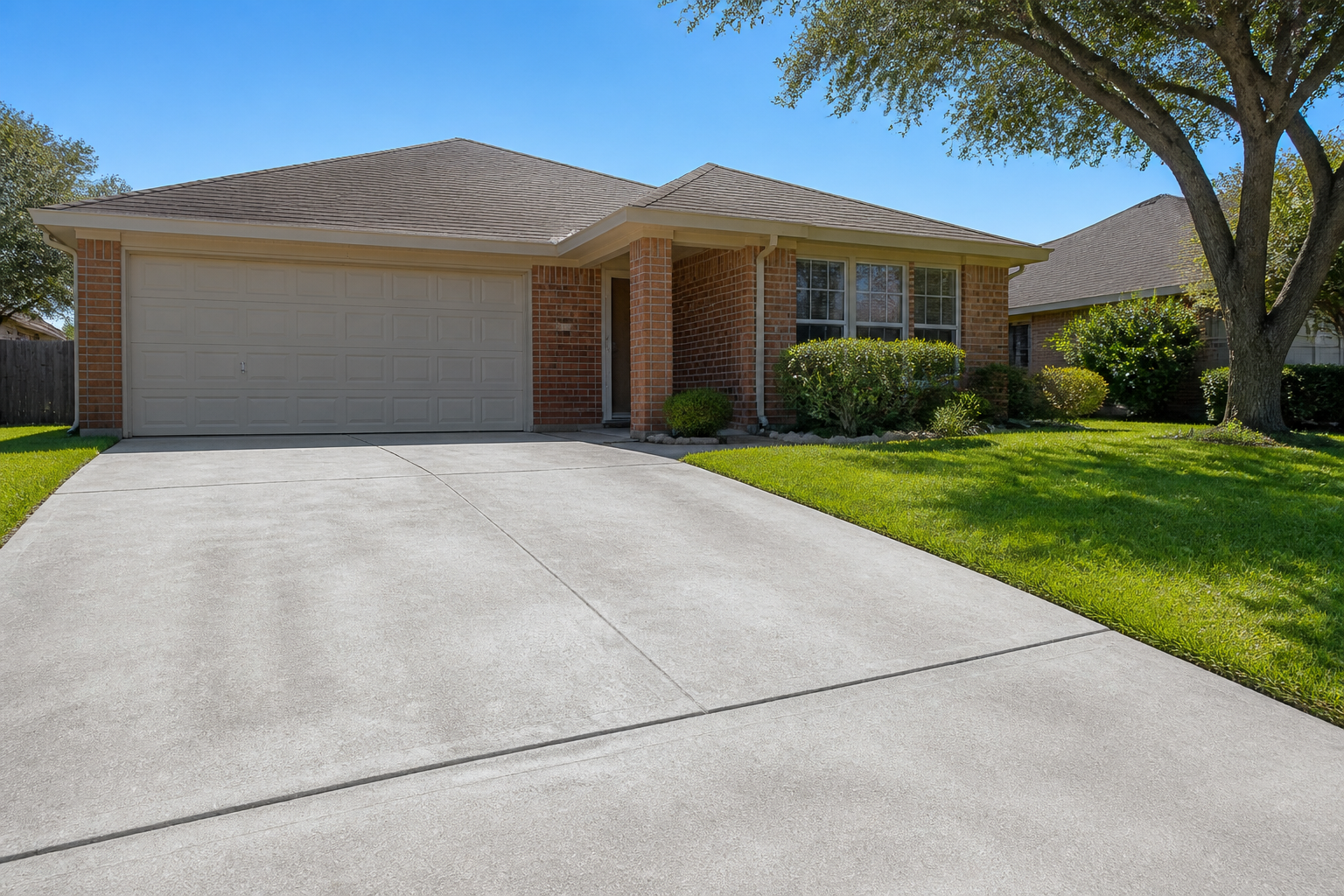
Your Driveway vs. The Texas Climate
Living in San Antonio means enjoying the sunshine, but that relentless Texas sun isn't so kind to your home's concrete driveway. You look at it every day. It's the welcome mat to your property. But between the heat, sudden downpours, and daily use, it takes a beating. You might be wondering, "Is spending money on driveway sealing really worth it?"
It's a fair question. Sealing isn't just about making your driveway look new again. It's preventative maintenance. Think of it like changing the oil in your car. You do it to prevent bigger, more expensive problems down the road. For your driveway, those problems are cracking, staining, and ugly organic growth that thrives in our humid climate.
Let's break down the real-world factors affecting your concrete and whether sealing is a practical solution.
The Top 3 Enemies of Your San Antonio Driveway
Your concrete might look solid, but it's actually a porous material, like a hard sponge. This porosity is the root cause of most driveway problems in our area.
1. Brutal Sun and Heat Cycles
The intense San Antonio sun does more than just make the pavement hot enough to cook on. UV rays bake the surface of your concrete, weakening the binder that holds the sand and aggregate together. This leads to a chalky, deteriorating surface.
Then there's the heat itself. Your driveway expands in the triple-digit temperatures and contracts as it cools overnight. This constant movement puts stress on the slab, creating hairline cracks. At first, they're tiny. But once a crack forms, it’s an open invitation for water to get in, which only makes things worse.
2. Humidity, Storms, and Organic Growth
We all know the humidity here can be oppressive. Your driveway feels it, too. When it rains, that porous concrete soaks up water. In shaded or damp areas, this moisture creates the perfect breeding ground for mold, mildew, and algae. You'll see it as ugly green and black streaks that are slippery and tough to clean.
This isn't just a cosmetic issue. As these organisms grow, their roots can work their way into the pores of the concrete, slowly breaking it down from the inside out and trapping more and more moisture.
3. Everyday Stains and Spills
A driveway's job is to hold cars, and cars can be messy. Oil leaks, transmission fluid drips, power steering fluid, and even coolant can leave permanent, ugly stains. Because concrete is porous, these fluids don't just sit on the surface; they soak in deep, making them almost impossible to remove completely.
Over time, these spills, combined with tire marks and dirt, can make even a relatively new driveway look old and neglected.
How Professional Driveway Sealing Acts as a Shield
So, how do you fight back against the sun, the rain, and the grime? This is where professional concrete sealing comes in. It’s not just painting a clear coat on top. A quality sealing process penetrates the concrete to protect it from within.
It Always Starts with a Deep Clean
You can't seal in dirt. The most critical step in protecting your driveway is a thorough cleaning. This isn't a quick rinse with a garden hose. It requires professional-grade equipment to remove all the ground-in dirt, oil, and organic growth from the concrete's pores. Our approach to pressure washing is designed to prepare the surface perfectly.
A proper cleaning ensures the sealer can penetrate deep into the concrete and form a strong, lasting bond. Sealing a dirty driveway is a waste of time and money, as the sealer will fail quickly.
Penetrating Sealers: The Right Tool for the Job
There are two main types of concrete sealers: topical coatings and penetrating sealers.
- Topical Coatings: These are the shiny, wet-look sealers you might see at a big-box store. They form a film on top of the concrete. The problem? Here in the Texas heat, that film can bubble, peel, and flake off. It can also become very slippery when wet.
- Penetrating Sealers: This is what we use. These sealers, often based on silane or siloxane, soak into the concrete and react chemically to form a hydrophobic (water-repelling) barrier inside the pores. It doesn't form a film on top, so it won't peel or make the surface slippery. It protects from within.
This internal barrier is what stops water, oil, and other liquids from soaking in. Instead, they bead up on the surface, allowing you to clean them up easily before a stain can set.
The Practical Benefits You'll Actually Notice
When you invest in driveway sealing in San Antonio, you’re buying protection that translates into real, tangible advantages.
- Stain Resistance: Oil, gas, and other vehicle fluids will bead on the surface instead of soaking in, making cleanup simple.
- Stops Mold and Mildew: By blocking water from entering the concrete, you starve mold, mildew, and algae of the moisture they need to grow.
- Reduces Cracking and Pitting: A sealed driveway is far more resistant to water penetration, which is a primary cause of cracking and spalling (pitting/flaking) from heat cycles.
- Easier Maintenance: Dirt, mud, and grime wash away much more easily from a sealed surface. A simple spray with a hose or a light rain can often do most of the work for you.
- Long-Lasting Protection: A professionally applied, high-quality penetrating sealer offers protection that can last for up to 10 years, preserving your concrete and saving you from costly repairs or replacement.
Take a look at some before-and-after projects in our gallery to see the difference for yourself.
Is It Worth It? The Bottom Line
Replacing a concrete driveway can cost thousands of dollars. Repairing significant cracks and surface damage isn't cheap, either.
Professional driveway sealing is a proactive investment in protecting one of your home's most significant and visible assets. It shields your concrete from the specific things that want to destroy it here in Texas. It keeps your property looking sharp, reduces your cleaning chores, and helps you avoid major repair bills down the line.
So, is it worth it? If you want to protect your investment and maintain your home's curb appeal for years to come, the answer is a clear yes.
Common Questions
- How often should I seal my driveway in San Antonio?
- The frequency depends on the quality of the sealer used and the amount of traffic your driveway gets. A professionally applied, high-quality penetrating sealer can provide protection for up to 10 years. We recommend visually inspecting your driveway every few years to see if water is still beading up or if it's starting to soak in.
- Will sealing my concrete driveway make it slippery?
- No. We use penetrating sealers that soak into the concrete and protect it from within. They do not form a film on the surface, so the natural texture and grip of your driveway remain unchanged. Some topical, high-gloss sealers can become slippery, which is why we avoid them.
- Can you seal an old or stained concrete driveway?
- Absolutely. The key is proper surface preparation. We perform a thorough pressure washing and specialized stain removal process first to lift as much of the existing oil, rust, and organic growth as possible. Sealing then locks in that cleaner look and prevents future staining.
- What is the best time of year for driveway sealing in Texas?
- The ideal times are during the milder months, typically in the spring and fall. We need a period of a few dry days with moderate temperatures for the sealer to be applied correctly and cure properly, away from the extreme summer heat or unpredictable winter freezes.