The Unseen Enemy: Your Roof vs. the Texas Sun
Here in San Antonio, we know a thing or two about the sun. It dictates our days, cranks up our A/C bills, and makes finding a shaded parking spot a small victory. But while you’re inside enjoying the cool air, that same relentless sun is in a slow-motion battle with your home’s most critical protector: your asphalt shingle roof.
Most homeowners worry about the obvious threats—hailstorms, high winds, and torrential rain. What’s often overlooked is the quiet, constant damage happening every single clear day. The sun’s ultraviolet (UV) radiation is actively breaking down your shingles from the inside out, baking the life right out of them.
Understanding this process is the first step in protecting your investment and avoiding a premature, and costly, roof replacement.
What Your Shingles Are Made Of (And Why It Matters)
To understand the damage, you first need to know what you’re trying to protect. An asphalt shingle isn’t just a simple flap of material. It’s a composite system with a few key layers:
- Fiberglass Mat: This is the skeleton, providing structure and strength.
- Asphalt (Bitumen): This is the waterproofing heart of the shingle. It’s saturated into the fiberglass mat.
- Ceramic Granules: These tiny, rock-like particles are pressed into the top layer of asphalt. They provide color and, more importantly, reflect UV rays, acting as a sunscreen for the shingle.
The most important component in this discussion is the asphalt. When it’s manufactured, it’s infused with natural oils. These oils are what keep the asphalt flexible, pliable, and waterproof. Think of it like the oils in your own skin that keep it from becoming dry and cracked. A new, healthy shingle can bend and flex to handle temperature changes, impacts from small hail, and strong winds.
How the Sun Dries Out Your Roof
Every day, your roof endures a cycle of heating and cooling. Here in Texas, that cycle is extreme. The surface of your roof can easily reach 150-170°F on a hot summer afternoon.
This intense, sustained heat, combined with direct UV radiation, causes the essential oils within the asphalt to slowly evaporate. It’s a chemical process called volatilization. Year after year, more and more of these oils bake out of the shingles.
As the oils disappear, the asphalt undergoes a fundamental change. It loses its flexibility and becomes hard and brittle. A once-resilient shingle now has the consistency of old, dried-out plastic.
The Telltale Signs of a Sun-Baked Roof
This brittleness leads to a cascade of other problems you can see for yourself:
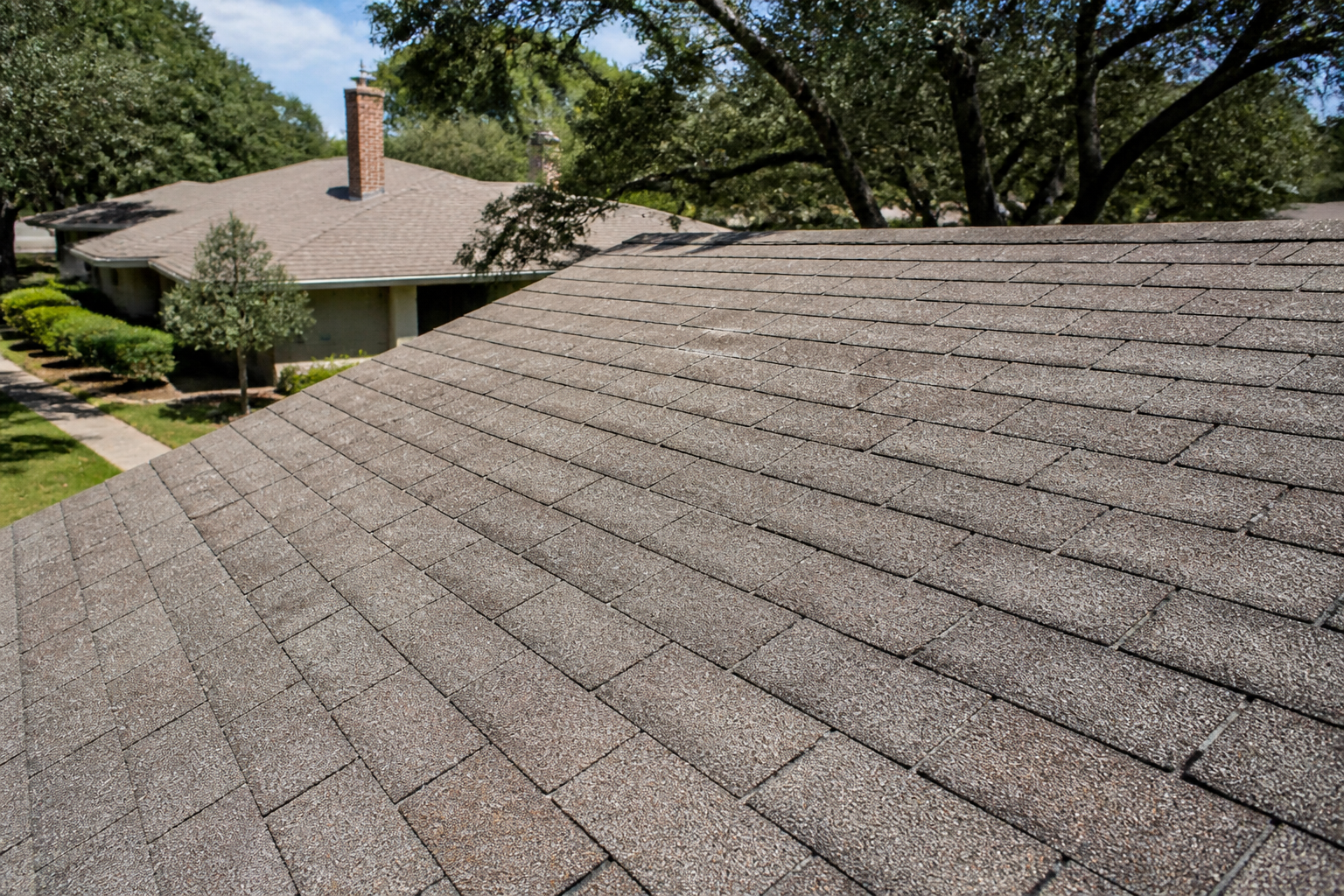
- Granule Loss: As the asphalt hardens, its grip on the ceramic granules weakens. Rain and wind easily wash them away. If you see a build-up of what looks like coarse black sand in your gutters and at your downspouts, you’re looking at the slow disintegration of your shingles.
- Cracking: A brittle shingle can't expand and contract with temperature changes anymore. This stress leads to tiny hairline cracks, often called crazing. Over time, these become larger, deeper cracks that expose the fiberglass mat underneath.
- Curling and Cupping: As the shingle dries and shrinks, the edges and corners can begin to lift and curl. This breaks the watertight seal between shingles and creates an easy entry point for wind and rain.
Once the granules are gone and the asphalt is cracked, your roof’s primary waterproof layer is compromised. It’s only a matter of time before water finds a way in.
From Sun Damage to Storm Damage
A sun-damaged roof doesn’t fail on a bright, sunny day. It fails during the next big Texas storm.
The brittleness caused by years of UV exposure makes your roof critically vulnerable to the very things it’s supposed to protect you from.
- Hail: A healthy, flexible shingle might absorb the impact of small-to-medium hail, leaving only a minor dent. A brittle, sun-baked shingle will shatter on impact, knocking off granules and punching holes straight through the shingle. This is why an older roof often suffers catastrophic damage in a hailstorm that a newer roof weathers just fine.
- Wind: Those curling, stiff shingles are like little sails. Winds that would normally flow right over a flat, sealed roof can get underneath a lifted shingle and rip it right off the roof deck. The adhesive strips that seal shingles together also become brittle and fail, weakening the entire roof system.
Sun damage is the underlying condition that turns a typical San Antonio storm into a roof-destroying event.
You Have Options: The Role of Roof Rejuvenation
For decades, the only answer to an aging, brittle roof was a full replacement. You had to wait until it failed, then spend tens of thousands of dollars to tear it all off and start over. But what if you could intervene before it gets to that point?
That’s the purpose of roof rejuvenation. It’s not a paint or a sealant that just sits on the surface. It’s a scientifically formulated treatment that addresses the root cause of shingle aging: the loss of oils.
Our roof rejuvenation treatment is a bio-based solution that is sprayed directly onto your existing asphalt shingles. It soaks deep into the asphalt, replenishing the lost oils. This process restores a significant amount of the shingle’s original flexibility and granular adhesion.
By reintroducing these oils, we can help your roof:
- Regain Flexibility: Making it more resistant to cracking and damage from hail impacts.
- Hold Onto Granules: Helping the shingle retain its remaining protective granule layer.
- Improve Adhesion: Helping the shingles seal better to resist wind uplift.
This isn't a fix for a roof that is already falling apart. You can't put granules back on or magically seal gaping holes. But for a roof that is showing signs of aging—dryness, brittleness, and granule loss—rejuvenation can be an extremely effective maintenance step. A single treatment can add up to 5 years of life to your roof, and treatments can be repeated over time. You can see the results for yourself in our gallery of past projects.
As a company founded on the Marine Corps values of honor and integrity, we believe in providing honest solutions. For many San Antonio homeowners, proactive roof rejuvenation is a practical, cost-effective way to protect their roof from the sun and extend its service life, saving them from a premature replacement.
Common Questions
- Is sun damage on my roof covered by homeowners insurance?
- Generally, no. Sun damage is considered normal wear and tear or a gradual maintenance issue, which is typically excluded from insurance policies. However, if a sun-weakened roof is subsequently damaged by a covered event like a hail or wind storm, that specific storm damage may be covered.
- My roof is only 10 years old. Is it already being damaged by the sun?
- Yes. The aging process from UV exposure begins the day your roof is installed. The rate of deterioration depends on factors like the quality of the shingle, the amount of direct sun exposure (south/west-facing slopes age faster), and your attic's ventilation.
- Does the color of my shingles affect how much sun damage they get?
- Yes, to an extent. Lighter-colored shingles reflect more sunlight and therefore absorb less heat. This can slightly slow the rate at which the oils bake out. However, UV radiation still damages the shingle surface and degrades all colors over time, so no shingle is immune.
- Can I just have my roof pressure washed to fix the look?
- Pressure washing is a cleaning service designed to remove dirt, algae, and stains. While it can improve curb appeal, it does not address the underlying chemical problem of dried-out, brittle asphalt. In fact, using high pressure on an aging roof can strip away more granules and cause significant damage.
- How is roof rejuvenation different from a roof coating?
- Roof rejuvenation is a penetrant. It soaks into the shingle to replace the lost oils from within, restoring flexibility. A roof coating is a sealant, like paint, that forms a film on top of the shingle. Coatings can trap moisture, peel, and may not solve the core issue of brittleness.