
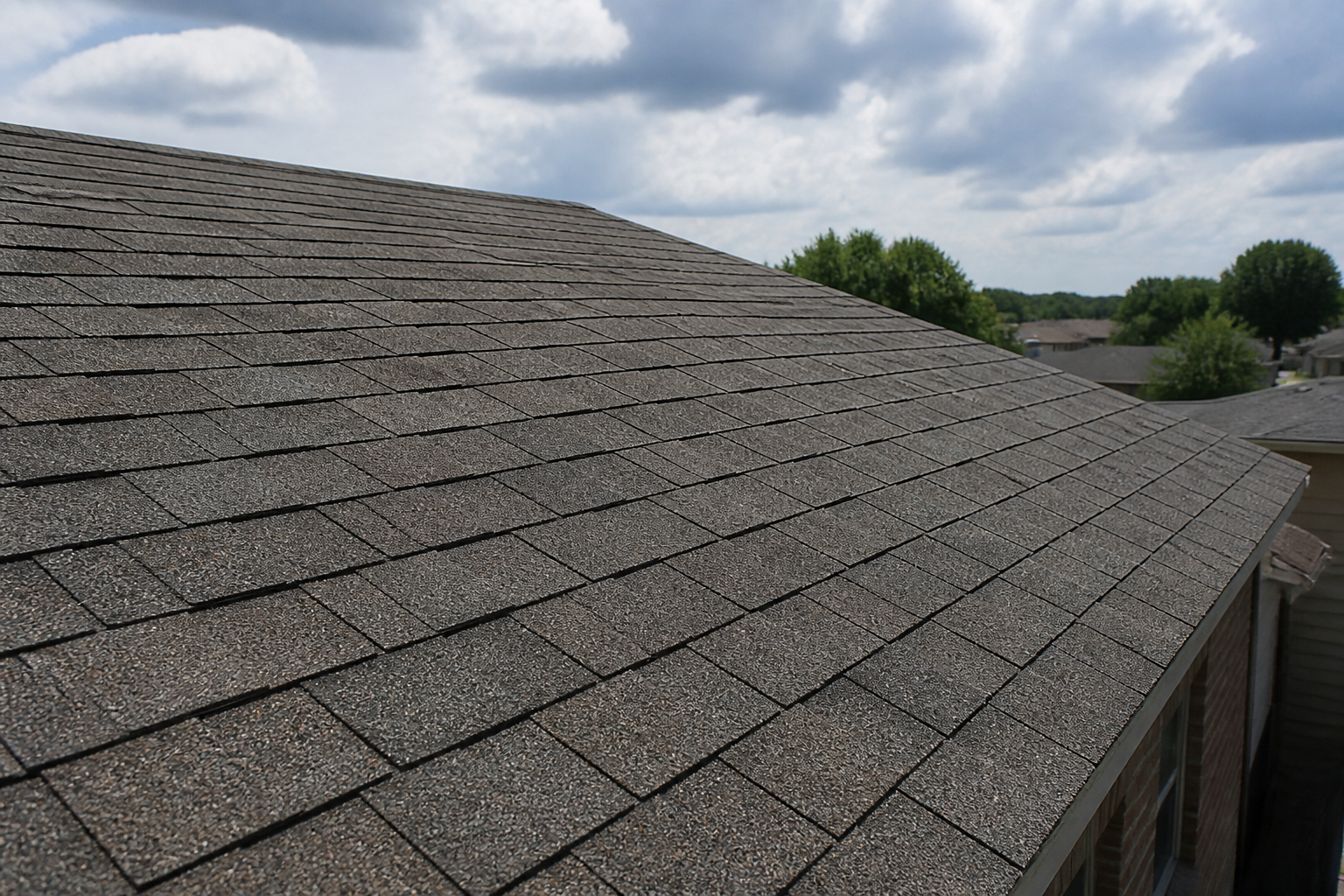
Why Aging Roofs are a Target During Hail Season
In San Antonio, hail isn't a surprise—it's an expectation. While we all brace for the big storms that make the news, even smaller, more frequent hailstorms can take a serious toll on your home's first line of defense: your roof. This is especially true for roofs that are more than a few years old.
An asphalt shingle isn't just a simple flap of tar paper. When it's new, it’s a flexible, multi-layered system designed to shed water and withstand impact. The top layer of ceramic granules protects the asphalt underneath from the brutal Texas sun. The asphalt itself is rich with oils that keep the shingle pliable and tough.
Over time, that relentless sun bakes the oils out of the asphalt. This has two major effects:
- The shingles become brittle. Instead of being flexible enough to absorb the impact of a hailstone, they become rigid. A brittle shingle is far more likely to crack, fracture, or have a hole punched straight through it.
- The granules come loose. As the asphalt binder dries out, it loses its grip on the protective granules. You'll see them as a coarse sand collecting in your gutters or at the base of your downspouts. This granule loss exposes the underlying asphalt to more UV radiation, which speeds up the aging process even more.
When a hailstorm rolls through, it’s these brittle, granule-depleted shingles that suffer the most. What might bounce off a new roof can cause thousands of dollars in damage to an older one.
Your Pre-Season Hail Prep Checklist
You don't need to be a roofing expert or climb a ladder to get a good sense of your roof's condition. A few simple observations from the ground can tell you a lot about how your roof might handle the next storm.
Look for Telltale Signs from the Ground
Take a walk around your house on a clear day and look for these common red flags:
- Granules in Gutters: Check the outlets of your downspouts. If you see a collection of what looks like dark sand or small pebbles, those are the granules from your shingles. A significant amount is a clear sign that your roof's protective layer is wearing away.
- Dark Spots or Discoloration: From the street, scan your roof for areas that look darker or inconsistent in color. This often indicates patches where granule loss is severe, exposing the black asphalt underneath.
- Curling or Lifting Shingles: Look along the edges and corners of the shingles. If you see them starting to curl up or down, it means they are drying out and shrinking. These lifted edges are prime targets for wind and hail, which can easily tear them off.
- Visible Cracks or Missing Shingles: Any obvious physical damage is a major vulnerability. A single missing shingle creates a direct path for water to get into your home, and a cracked shingle is a failure waiting to happen.
Check Your Gutters and Drains
Clean gutters are crucial for roof health. When gutters are clogged with leaves and debris, rainwater has nowhere to go. It backs up onto the roof's edge, soaking the decking and fascia boards. During a hailstorm, this trapped water can lead to serious leaks and ice damming. Ensuring your gutters are clear is a simple but effective part of hail prep. A professional pressure washing service can often include gutter clearing.
Trim Overhanging Branches
This is straightforward yard work that doubles as roof protection. In the high winds that often accompany Texas hailstorms, dead or heavy branches can snap off and fall onto your roof, causing significant impact damage. Trimming back any limbs that hang over your house removes this risk.
Beyond Repair: Proactive Roof Rejuvenation
If your inspection reveals that your roof is aging—if the shingles are looking dry and you’re seeing granule loss—you're at a crossroads. You can wait for a storm to cause enough damage to justify a full replacement, or you can take proactive steps to extend the life of the roof you already have.
This is where roof rejuvenation comes in. It’s not a repair service for broken shingles, but a preventative treatment that addresses the root cause of age-related failure: dryness and brittleness.
Think of it like a deep conditioner for your asphalt shingles. Our treatment is a scientifically formulated solution that penetrates deep into the shingle, replenishing the petrochemical oils that have baked out over the years. This process restores much of the shingle's original flexibility and helps lock down the remaining granules.
How Rejuvenation Helps with Hail Season Prep
By restoring flexibility, roof rejuvenation directly prepares your aging shingles to better withstand hail impact. A pliable shingle can absorb the force of a hailstone and rebound, while a brittle shingle will crack. It helps your roof act young again.
This single treatment can add up to 15 years to the life of your asphalt roof. It's a practical, cost-effective way to protect your investment and delay the massive expense of a full roof replacement, all while giving you peace of mind heading into storm season.
Don't Forget Your Other Surfaces
The same severe weather that threatens your roof can also damage your other exterior surfaces. As you prepare for hail season, take a look at your concrete and wood areas.
- Concrete Driveways & Patios: Hail and freeze-thaw cycles can cause pitting and spalling on unprotected concrete. A professional deep cleaning and sealing can protect it from moisture intrusion, which is the root cause of this damage. Our concrete sealing can protect your surfaces for up to 8 years.
- Decks & Fences: Wood is especially vulnerable to the moisture and impact that come with severe storms. A professional wood treatment not only beautifies the wood but also seals it against the elements, helping to prevent rot and splintering for up to 5 years.
Getting your whole property ready is the smartest way to face down a San Antonio hail season.
Common Questions
- What are the biggest signs my roof is vulnerable to hail?
- Look for granules (like coarse sand) in your gutters, curling or cracked shingles, and dark spots on your roof. These are key signs that the shingles are old, brittle, and have lost their protective top layer.
- Can I just get my roof inspected after a hailstorm?
- You should always inspect for damage after a storm, but proactive preparation is far better. An aging, brittle roof is much more likely to sustain costly damage than one that has been properly maintained and prepared before the storm hits.
- How does roof rejuvenation help with hail?
- It restores the flexibility of your old asphalt shingles by replenishing their lost oils. A flexible shingle can absorb the impact of a hailstone, while a brittle one is more likely to crack, break, and leak.
- Is roof rejuvenation a good option if my roof is already leaking?
- Roof rejuvenation is a preventative treatment for aging shingles, not a repair for existing damage like active leaks or missing shingles. Those structural issues must be repaired by a roofer first. We can assess the condition of your roof during a free estimate.