The Temptation of the Weekend Rental Machine
Walk into any big-box home improvement store in San Antonio on a Saturday morning, and you will see homeowners loading rented pressure washers into the beds of their trucks. The idea makes sense on the surface. Dirt, mildew, and road grime build up quickly under the Texas sun. Renting a machine for forty or fifty dollars looks like a simple, budget-friendly way to clean driveways, patios, and siding.
Unfortunately, high-pressure equipment in untrained hands often turns a quick weekend project into thousands of dollars in property damage. Pressure washing equipment produces anywhere from 2,000 to over 4,000 pounds per square inch (PSI) of force. To put that in perspective, a standard garden hose runs at about 40 to 60 PSI. When you multiply that power by fifty or sixty times through a narrow brass tip, you are no longer holding a cleaning tool. You are holding a cutting tool.
Understanding the real dangers of pressure washing helps homeowners protect their biggest investment from preventable, permanent damage.
Etching Concrete and Destroying Driveways
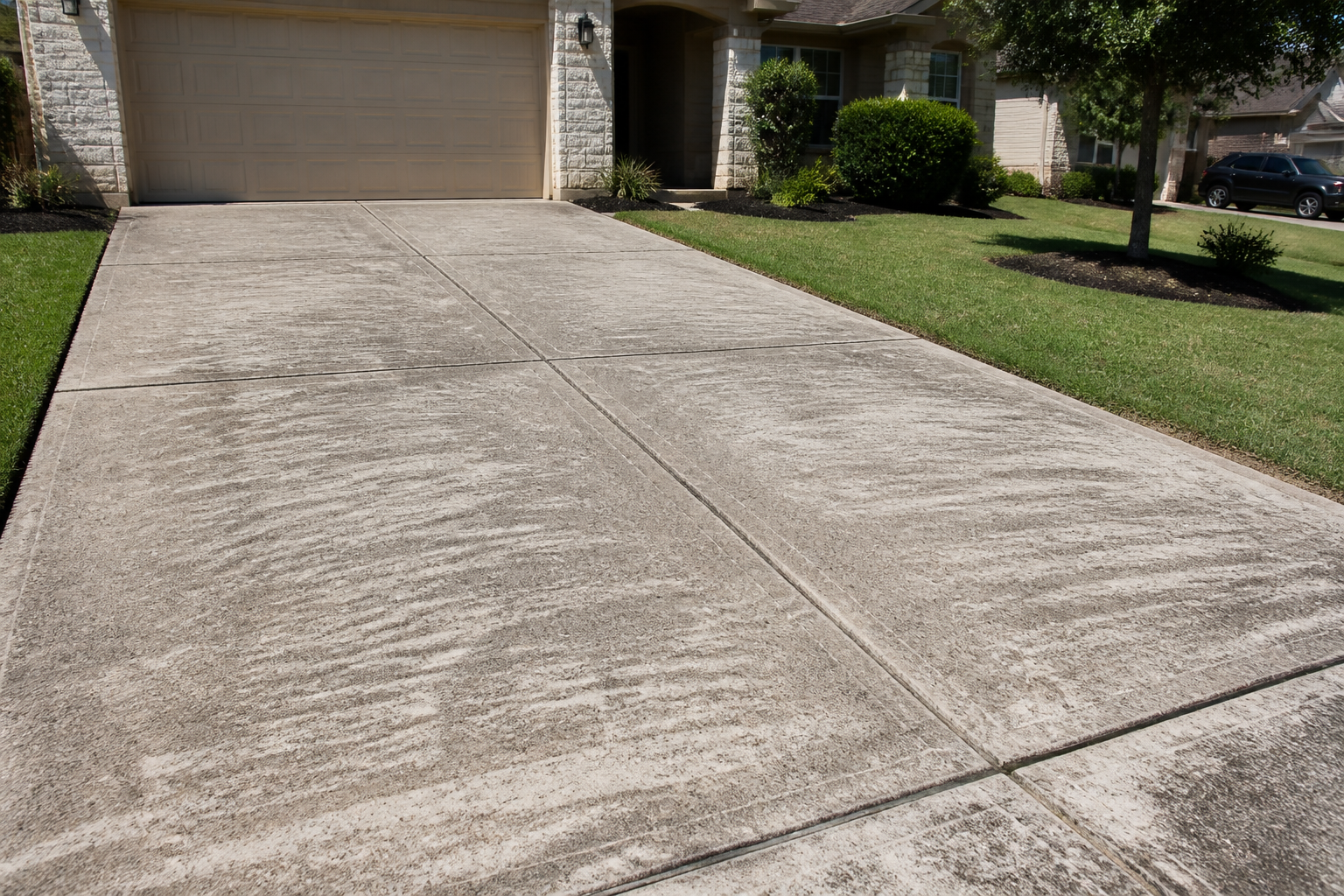
One of the most frequent DIY disasters happens right on the front driveway. Homeowners assume concrete is indestructible. It looks tough, handles heavy pickup trucks, and survives blistering summer heat. However, the surface of poured concrete—known as the "cream" or finished paste layer—is relatively thin and vulnerable to concentrated water pressure.
When using an improper nozzle or holding the spray wand too close to the surface, the stream tears into that finished layer. This results in what the industry calls "striping" or "etching." You have likely seen driveways around your neighborhood marked with zigzag patterns, lines, and blotches. Those lines are not clean spots. They are permanent scars where the top layer of concrete was gouged away, exposing the rough aggregate underneath.
Once concrete is etched, there is no way to wash the marks out. The only fixes are expensive resurfacing or complete replacement. Even if you plan on applying concrete sealing to protect your flatwork from oil and rain down the road, sealer cannot restore concrete that has had its top layer cut away by an aggressive spray tip.
Shredding Sun-Baked Wood Fences and Decks
Cedar and pine fences take a beating from the South Texas elements. High UV exposure breaks down the surface fibers of the wood, turning it gray and dry. Homeowners often try to blast away that gray layer with high pressure to expose fresh wood.
Wood is soft, porous, and fibrous. Pointing a high-pressure nozzle at a wooden fence or deck will:
- Gouge deep furrows across the grain.
- Cause "feathering" and splintering that ruins the smooth finish.
- Drive gallons of water deep inside the wood fibers, creating rot issues later.
- Knock pickets loose and blow out fasteners.
Once the wood fibers are raised and shredded, walking barefoot on a deck becomes a hazard. Restoring shredded wood requires hours of heavy sanding before any wood treatment can be applied. Cleaning wood safely requires low pressure and appropriate cleansers that loosen dirt and mildew without chewing up the wood fibers.
Blown Window Seals and Hidden Water Intrusion
Siding and exterior walls are built to deflect falling rain, not high-speed horizontal blasts of water. When homeowners aim a pressure washer upward at their siding or around window frames, water gets forced into places it was never designed to go.
Blown Window Seals
Modern double-pane and triple-pane windows rely on an airtight seal around the edge of the glass panes. These seals keep insulating gas trapped inside. The direct hit from a high-pressure stream easily blows past the exterior caulking, breaks the seal, and allows moisture between the panes. The result is permanent fogging, condensation, and ruined energy efficiency. The only remedy is replacing the insulated glass unit or the entire window.
Trapping Water Behind Siding
Vinyl siding, fiber cement (HardiePlank), and stucco are popular choices throughout San Antonio. Spraying high pressure under siding laps or directly into weepholes pushes gallons of water straight behind the exterior cladding. This water saturates house wrap, insulation, and wooden wall studs. Because the water is trapped inside a dark wall cavity in warm weather, it quickly leads to hidden rot and mold growth that goes unnoticed until drywall softens inside your living room.
Damaging Stucco, Mortar, and Brick
Many neighborhoods in Bexar County feature traditional brick or masonry facades. Brick itself is durable, but mortar is soft. A zero-degree or high-pressure nozzle held too close can easily chip away old mortar joints. Once the mortar begins to crumble, the structural integrity of the wall degrades, inviting moisture penetration and pest intrusion.
Stucco and synthetic exterior finishes (EIFS) are even more vulnerable. High pressure can blast holes straight through the finish coat, peel away paint, and gouge the underlying foam or mesh. Repairing patched stucco rarely blends seamlessly with the surrounding texture, leaving obvious patch marks across the front of your house.
Why Pressure Should Never Touch Asphalt Shingles
Perhaps the most catastrophic DIY mistake is dragging a pressure washer up onto a roof. When roofs develop dark black streaks, homeowners frequently assume a pressure washer is the right tool to blast the discoloration away.
Those dark streaks are an algae known as Gloeocapsa magma, which feeds on the limestone filler in asphalt shingles. Blasting a roof with pressure will remove the algae, but it will also strip away the protective mineral granules that shield the asphalt from the brutal Texas sun.
Once those granules are dislodged:
- The asphalt shingle is directly exposed to UV rays.
- Shingles become brittle, curl, and crack significantly faster.
- Hail and storm resistance is completely compromised.
Roofs should never be pressure washed. Instead, safe low-pressure chemical washing should be used to remove organic growth, followed by specialized applications like roof rejuvenation to preserve the flexibility of aging shingles. High pressure on a roof simply destroys the material you are trying to clean.
Personal Safety Hazards
Beyond property damage, the dangers of pressure washing include serious bodily injury. These machines are not heavy-duty garden hoses; they are industrial tools.
- Injection Injuries: A high-pressure stream can puncture skin and inject contaminated water deep into soft tissue. These injuries often look like minor cuts on the surface but can cause severe internal infections that require emergency surgery.
- Ladder Kickback: Operating a high-pressure wand produces significant recoil. Squeezing the trigger while standing on a ladder frequently causes homeowners to lose balance, leading to dangerous falls onto driveways or landscaping.
- Flying Projectiles: Concrete chips, gravel, and loose debris can ricochet off hard surfaces at high speeds, risking eye damage or cracked vehicle windows.
Why Soft Washing Is the Safer Path
Professional surface cleaning companies rarely rely on raw water pressure alone. For delicate surfaces like siding, roofs, and painted wood, the standard method is "soft washing." Soft washing relies on targeted cleaning solutions applied at low pressure—roughly the force of a standard garden hose. The cleansers neutralize mold, algae, and mildew at the root, allowing them to be gently rinsed away without gouging surfaces, stripping paint, or driving water into wall cavities.
High pressure has its place, primarily on unsealed concrete flatwork, but only when paired with dedicated surface cleaners that disperse pressure evenly through spinning spray bars. This eliminates the gouges and lines caused by hand-held wands.
Investing in professional pressure washing avoids the risk of costly DIY mistakes. It protects your siding, preserves your concrete, and keeps you safely on the ground.
Common Questions
- Can pressure washing ruin concrete driveways?
- Yes. Holding a high-pressure tip too close or using an incorrect nozzle can etch the top layer of finished concrete, leaving permanent lines and exposing rough aggregate underneath.
- Why shouldn't I pressure wash my asphalt shingle roof?
- High pressure strips away the protective mineral granules that protect asphalt shingles from the sun and heat. Once granules are lost, shingles dry out, curl, and deteriorate much faster.
- What is the difference between pressure washing and soft washing?
- Pressure washing uses high mechanical water force to strip away dirt, which is best reserved for hard, durable surfaces. Soft washing uses low pressure combined with specialized cleaning solutions to safely remove organic growth from siding, roofs, and wood.
- Can high pressure break window seals?
- Yes. Direct high pressure easily forces water past exterior window seals and caulking, breaking the seal between double panes and causing permanent fogging and condensation.